

Driving Progress
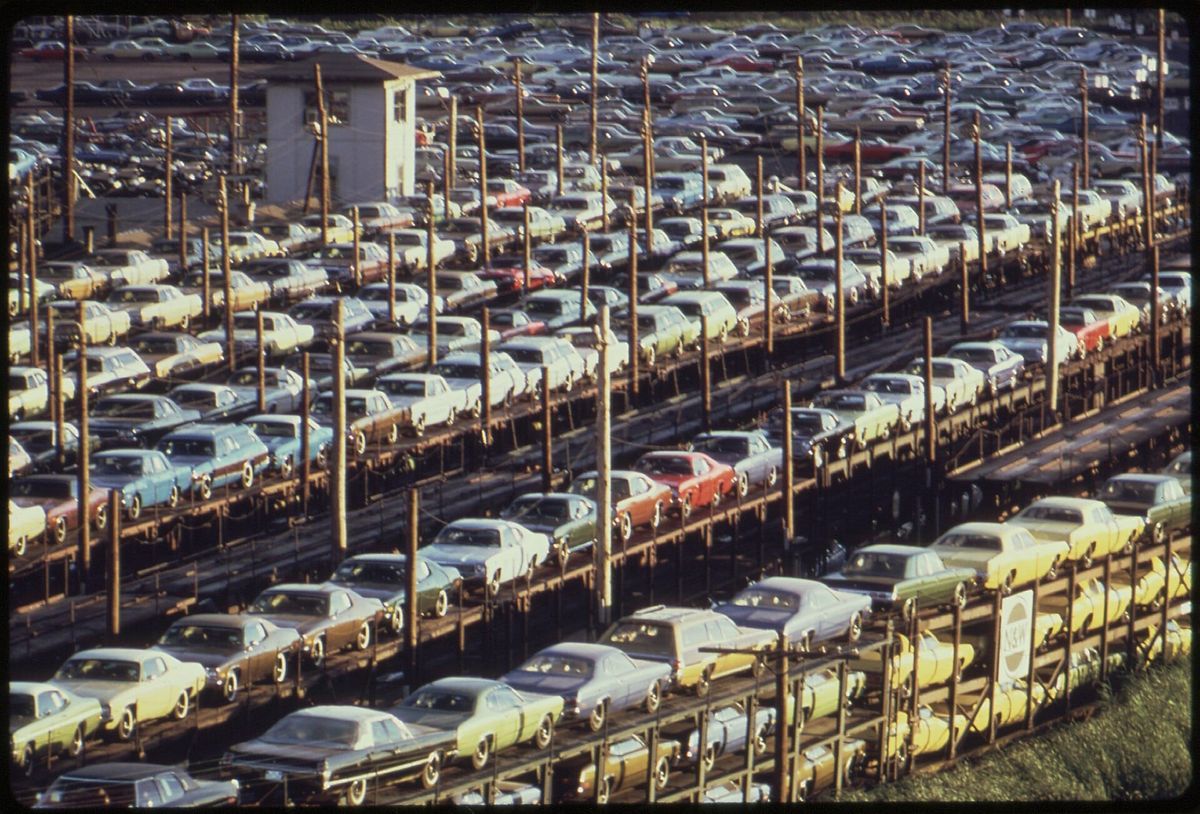
Cars have long been synonymous with speed, progress and individual freedom. To drive a car is to grasp hold of the potentials of individual choice: to close oneself off from the swarming crowds; to take to the open road in a gleaming can of steel; to drive headlong into the sunset; to pursue the future at dizzying speed, self-fulfillment at the expense of the collective. To drive, in short, is to be the archetypical capitalist self-actualizer: individualistic and forward moving, forever in search of the new.
Perhaps this is why cars are getting ever bigger and heavier, in a process that activists have newly termed “carspreading”. New research shows that since 2000, new cars have grown an average of 1.2cm longer, 0.5cm taller and 0.5cm wider each year. It all adds up quickly. If the trend continues, cities like London and Berlin lose around 10 per cent of all their parking spaces by 2040, while also seeing around 400 extra pedestrian deaths each year by the same date (as cars expand, the surface area for collisions with non-drivers grows, as does the scale and number of blindspots).
This rapid expansion (to, i'm tempted to say, American proportions) will also have a huge impact on the climate. On current trends, within the next decade and a half alone, it will mean an extra 100m barrels of oil imports a year simply simply to fuel these bulging juggernauts—or, according to Brian Caulfield, a transport researcher at Trinity College Dublin quoted in the Guardian, even if all anticipated new cars are electrified, the increased demand from size alone will be "the equivalent to the output of an extra 1,500 offshore wind turbines."
In this, it is hard not to see a metaphor for the creeping destruction of the planet, with cars expanding out of all proportion at the expense human and ecological wellbeing. But to view cars as merely symbols is to miss the long and brutal history of their actual creation—the real story behind these gleaming icons of modernity. Take Detroit, for example. During the mid-twentieth-century, the city became synonymous with motordom. In 1955 alone, nine million cars were produced there. Yet, only a few decades later, in a now familiar story, as the industry shuttered and offshored, Motor City became a symbol of urban decay and disorder.
Or, how about The Bronx? As the urban planner Katie Mulkowsky tells us this week for The BREAK–DOWN, between 1948 and 1972 Robert Moses's Cross-Bronx Expressway tore through the borough in a deeply damaging process of what the urban theorist Marshall Berman called at the time "urbicide". As the bulldozers moved in, some 60,000 people lost their homes and, as Berman wrote, in doing so, the road scheme transformed his native borough into a "garbage- and brick-strewn wilderness." Even today, Mulkowsky writes, the borough has "among the highest collision rates among US interstates, and residents surrounding the [Expressway] corridor have among the worst health outcomes in the city."
 Katie Mulkowsky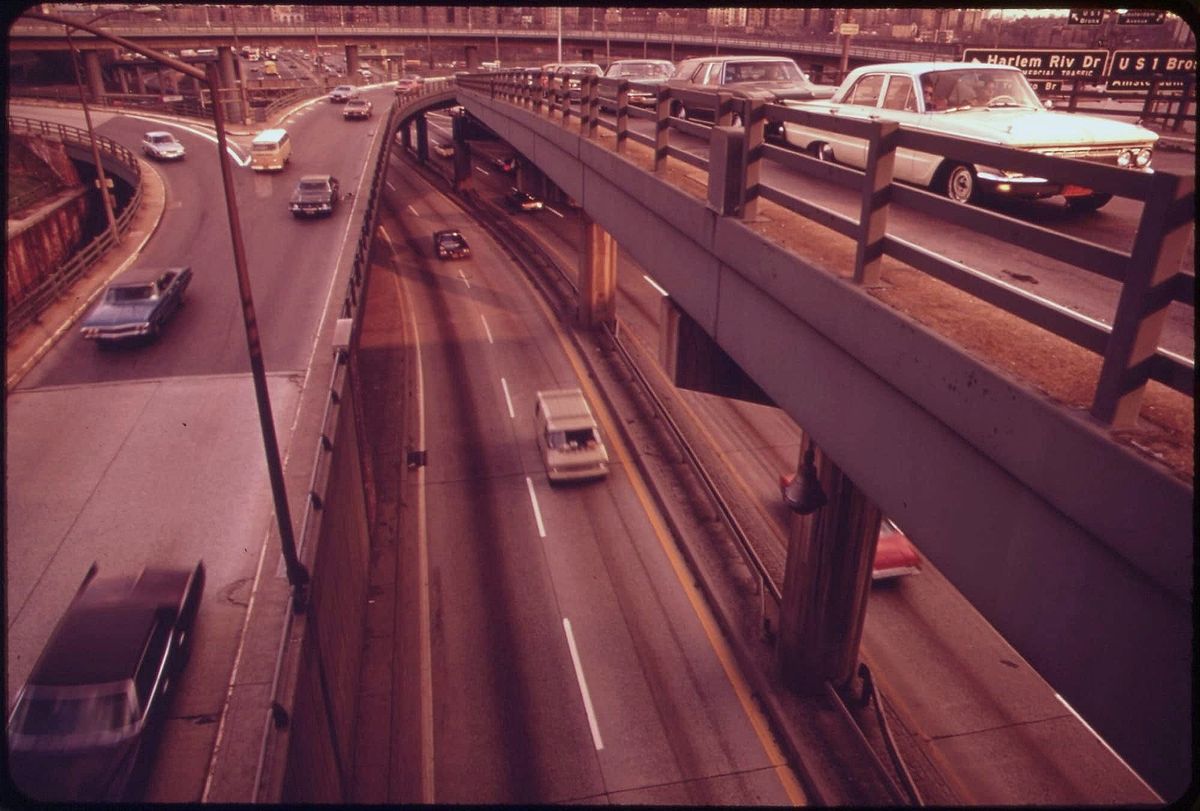
If the car has long had a powerful symbolic pull, acting as a cypher for all manner of political issues, in recent years it has also become a key site in the battle over net zero. As the cost of living rises, petrol prices have been forged into "wedge issues", turning otherwise apolitical investments in transport and mobility into new forms of reactionary politics. Farage and Reform UK clearly know the value of this: in March this year, the party kitted out a petrol station in Derbyshire in the party's distinctive turquoise colour scheme to announce their plans to slash fuel duties. More recently, Reform have allied this sort of posturing to a broader front in the politics of energy, with the party also pledging to open up new streams in the North Sea and to “make Britain energy independent once again by drilling for our own oil and gas.” Here are declining living standards turned to reactionary anti-ecologism.
In this, Reform are following the lead set by other parties of the right across the world. Lukas Slothuus, in our first print issue, showed how the far-right Sweden Democrats have successfully channelled the politics of the petrol pump to reactionary ends. More recently, Michael Ledger-Lomas charted the rise of petro-seperatism in Canada's Albertan independence movement.
Yet, as Mulkowsky reminds us, Berman wasn't simply appalled at the violent destruction of the city left in the cars' wake. Nor was he immune to the allure of the new. As she writes, "while watching Moses raze his neighbourhood, Berman ... struggled to shake the feeling that Moses was “miles and years ahead of us”. Unlike Moses, Berman wrote, "we", the mid-century left, "never learned how to ‘think big’"
"What made Robert Moses so special was the largeness of his visions and ideas, his intellectual and organizational power to grasp the whole." It is this, not the destructive power of the automobile, that is the key to the story of Robert Moses. It is also something we must learn, too. To destroy the power of motordom will take more than tinkering around the edges. The electrification of cars is happening, at a far more rapid pace than anyone would have predicted only a few years ago, lead above all by China (on which we will have several essays in our forthcoming print issue – more on this very soon!). But electrification in itself will not be enough. We need new visions of what cities can and should be, and who and what they should serve. And we need a new politics of mobility: less individualist and less beholden to the myth of the (ever-expanding) machine. We need, in short, communal luxury, not ever more individualized consumption.