


Since he was first elected in 2016, Donald Trump has been given several distinctly backhanded nicknames by Chinese social media users. Log on to WeChat or Weibo and you will see dozens of Chinese netizens referring to the president by names like Dong Wang (King Know-It-All), Chuan Huang (Emperor Trump) or, most cutting: Chuan Jianguo, Trump the nation builder. The nation he is building, of course, is China.
It’s easy to see why the moniker has caught on. As the US retreats further behind its economic borders and lashes out at random, punishing friends and rivals alike while engaging in a series of scattershot trade and hot wars, China pushes on with its global export drive. And while the US continues to bet the house on oil and gas, China has gone big on green tech. The results have been routinely astonishing.
In the first six months of 2025 China installed over 250 gigawatts of solar power capacity—more in half a year than the US has built ever, and more than twice the amount installed over the same period by the rest of the world combined. Nor is this pace unique to solar. China leads the way across the green technology sector, accounting for around 70 per cent of global electric vehicles (EV) production and 80 per cent of lithium-ion batteries. Domestically, this has driven a boom in clean power generation, so much so that last year the country’s carbon dioxide emissions fell for the first time despite growing electricity demand.
 Adrienne Buller
The implications of this dizzying construction are not confined to China’s borders, either. In the past two years, energy systems across the Global South have been transformed by Chinese-made solar, from Pakistan, which imported a staggering 47 GW of Chinese solar panels in the year to June 2025, to Ethiopia and Nigeria, the latter of which has now overtaken Egypt as the continent’s second-largest solar importer.
Meanwhile on “new energy vehicles”,[1] China is streaking ahead, transforming transport in many parts of the world. In Thailand, the top five car brands are now all Chinese EV manufacturers, while in Brazil Chinese brands constituted 90 per cent of all EVs sold in 2024. If only recently analysts worried that many countries would be priced out of the clean tech revolution, today China, with its staggering production of cheap technology, is almost single-handedly bringing the transition within reach for millions of people.
Breaking the old
All of this, of course, has transpired alongside the country’s continuing and well-publicized reliance on coal.
As Jeremy Wallace notes in his report for this issue from the Inner Mongolian city of Ordos, we can glimpse some of the reasoning behind China’s apparent energy and climate contradictions in Xi Jinping’s slogan: “first build the new, then break the old.” China is certainly building the new, and at breakneck pace. But, the old—for now—remains very much unbroken.
 Jeremy Wallace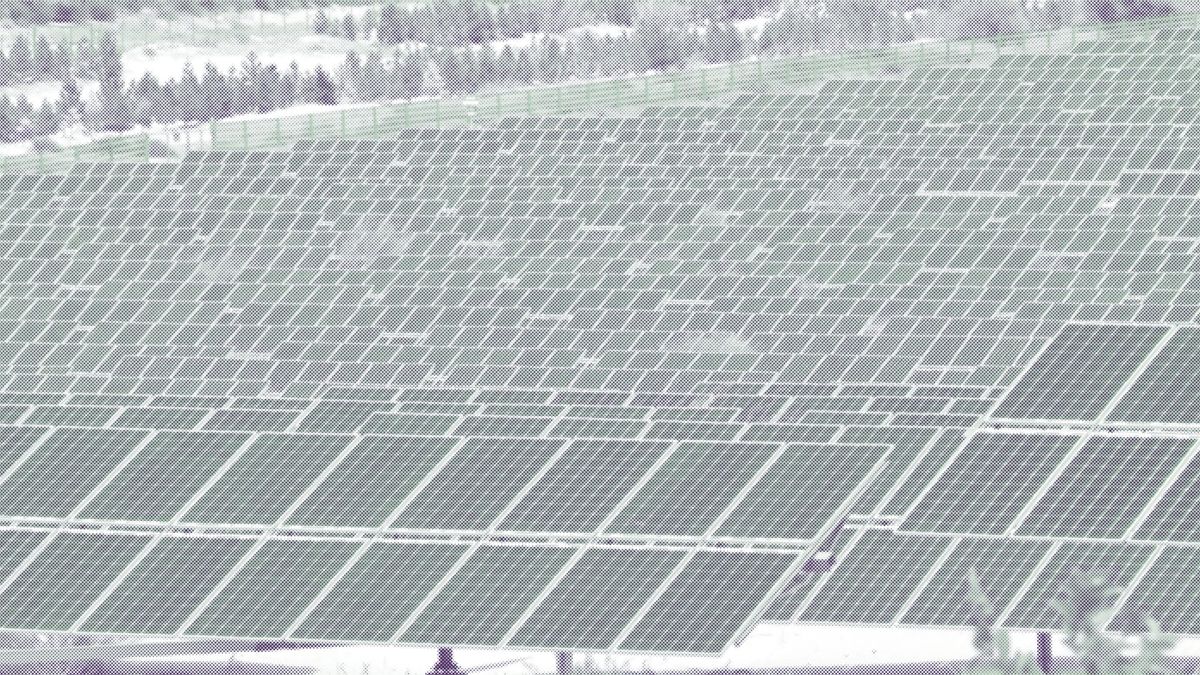
Take Ordos. Once known for its “ghost cities”, whole districts filled with empty apartment blocks, today it is surrounded by a sea of solar panels that provide electricity for cities as far away as Beijing. In the shadow of its old industrial centre, however, is something potentially just as significant: an economic development zone where sprawling modern factories turn millions of tonnes of coal into the raw materials for plastics, providing a demand sink for the vast quantity of coal that continues to be dug from the earth in China.
And even if, as many suspect, China’s coal power generation has peaked, the government’s latest five-year plan emphasizes coal’s ongoing importance in the energy mix, driven at least in part by ongoing conflict in the Middle East: against the global volatility of oil and natural gas prices, coal is seen as cheap, reliable and secure.
Despite this, there is no denying that China holds a unique position in driving the world’s energy transformation. As Kaiser Kuo and David Fishman argue in their contribution to this issue, this seems unlikely to change, as liberal capitalist states are by definition ill-suited to deliver the specific kind of innovation and complex coordination that the energy transition will increasingly demand. As they contend, much of what is needed now for the energy transition is both complicated to develop and expensive to produce, meaning “somebody must carry producers through their initial losses.” This, the political economies of the Global North appear signally incapable of doing. As Kuo and Fishman write, “what China has built—partly by design, partly by the accident of its own institutions—is the one system … where capital cannot easily walk away and where the state backstops the losses.”
One China, many Chinas
For those at the sharp end of the seismic changes now taking place, however, not all is green in the green tech sector. As Jared Paolino reports from the Hungarian city of Debrecen, the effects on the communities and ecosystems situated near the new Chinese-owned gigafactories churning batteries out by the million can be disastrous. In recent years, Debrecen has become a beachhead for Chinese EV and battery manufacturers hoping to move into the lucrative EU market. Workers there, Paolino notes, have been “repeatedly exposed … to toxic and carcinogenic chemicals”.
Similar environmental damage can be glimpsed within China, too. As the historian of Chinese environmentalism Judith Shapiro recounts in the interview that opens this issue, in the Mao era, nature in China became constructed as an “enemy” to be overcome through force of will. The effects of this policy, and its ongoing and damaging legacy, are clearly visible in several of the contributions to this issue: in Thomas White’s dispatch from the plains of Inner Mongolia, where the state has reshaped the landscape and lives of the area’s herders and farmers, and in the celebrated Chinese novelist Yan Lianke’s reflections on his home village in rural Henan, from where, he writes, “thousands of species of northern trees…have departed never to return.”
It is unclear how this destructive tendency should be reconciled with the state’s commitment to an “ecological civilization”, a concept examined by several contributions to this issue, and which was integrated into China’s constitution in 2018. While its precise meaning is slippery, it might best be interpreted, Shapiro contends, as the recognition—at least in principle—that “there is no contradiction, according to the Chinese state, between prosperity and environmental protection.” Whether this principle is being realized remains the subject of debate.
 Thomas White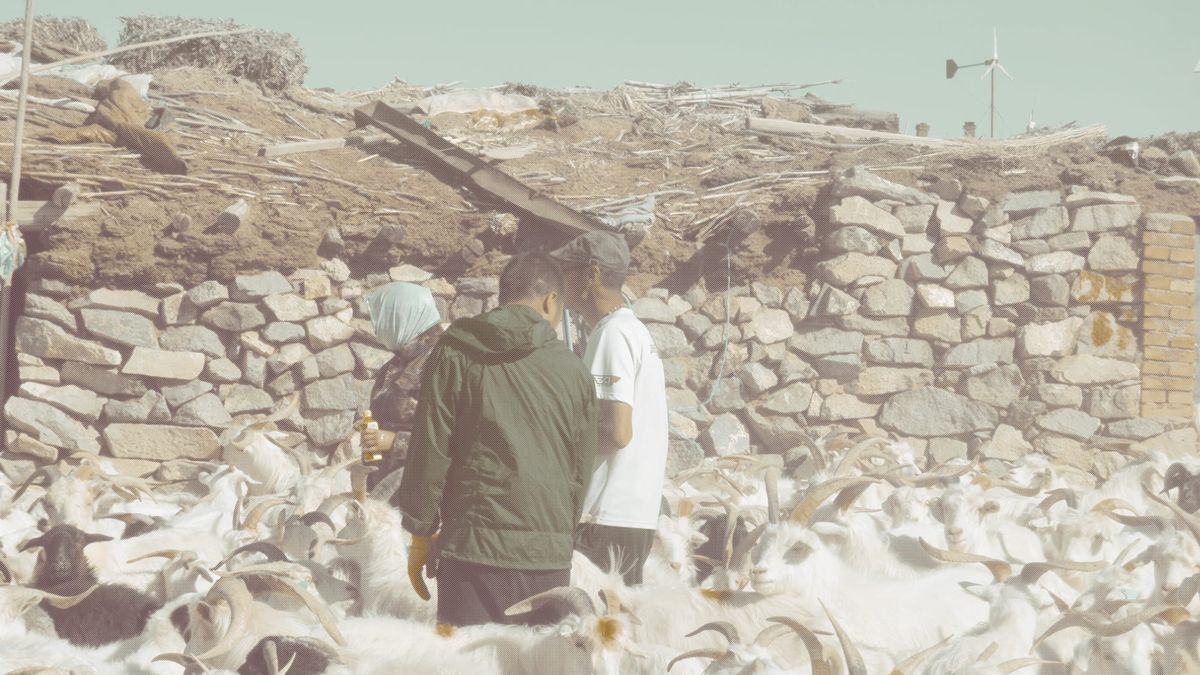
In all of this is a warning not to treat China as a monolith. It would be easy, from the increasingly declining West, to become “Chinapilled”—intoxicated by the sight of robotaxis and bullet trains zipping through futuristic Chinese skyscapes, set against fields of solar panels. If modernity was, until recently, synonymous with Europe and its cultural offshoots, today it seems far more at home in Guangzhou than in Frankfurt or Philadelphia.
Indeed, Yan Lianke is himself a reminder of another China all too easily forgotten. As the novelist told his translator Jeremy Tiang in a recent interview for the Paris Review, he wants his works to be the “kind of writing that only someone from the [Chinese] countryside could have come up with.” China may have urbanised at an unprecedented rate over the past 70 years, with some 800 million Chinese moving from the rural provinces to its ever-expanding cities but the rural-urban divide remains a source of tension in the country.
Yan Lianke is often cited as a future Nobel laureate, yet as he frequently says, he is “the only Chinese writer living in China who isn’t published in China.” Pressure from the state has made it increasingly difficult for him to find an outlet for his work in the country, despite international success.
Something similar applies for many in the once-thriving Chinese environmental civil society. As journalist Michelle Chen documents, organizing, whether around the environment or on labour issues, is increasingly difficult, a symptom of a state willing to restrict freedoms in service of other ends. As Chen underscores, there is an urgent need for solidarity from outside China in the struggle to build a bottom-up movement for climate justice that can contend with the country’s top-down drive to dominate green technologies.
How then, should those of us committed both to the climate and to justice relate to China? This remains a difficult question to answer, and one around which each of the contributions to this issue circles. Even within these pages, there is dissensus.
What is clear, though, is that to understand China we must overcome both the uncritical optimism of “Chinamaxxers” and the equally shortsighted tendency among Western commentators and think tanks, as Kamil Ahsan examines in his essay, to fixate on China as a monolithic military threat—an expression of the “global civilizational turn”, as scholars Hans Kundnani and Srirupa Roy have described it, in which the world is viewed as increasingly divided into competing and incompatible civilizational blocs, all vying for dominance.
Instead, to think through the climate crisis today means recognizing China as a central historical protagonist. To understand what is to come, we must try to see the country as it actually is, in all of its messiness and apparent contradiction—not how we would wish it was or want it to be. One thing is certain: for all of us, wherever we are, there is no route out of the climate crisis that does not run through China.

- A category that includes EVs as well as plug-in hybrids and fuel-cell vehicles.