

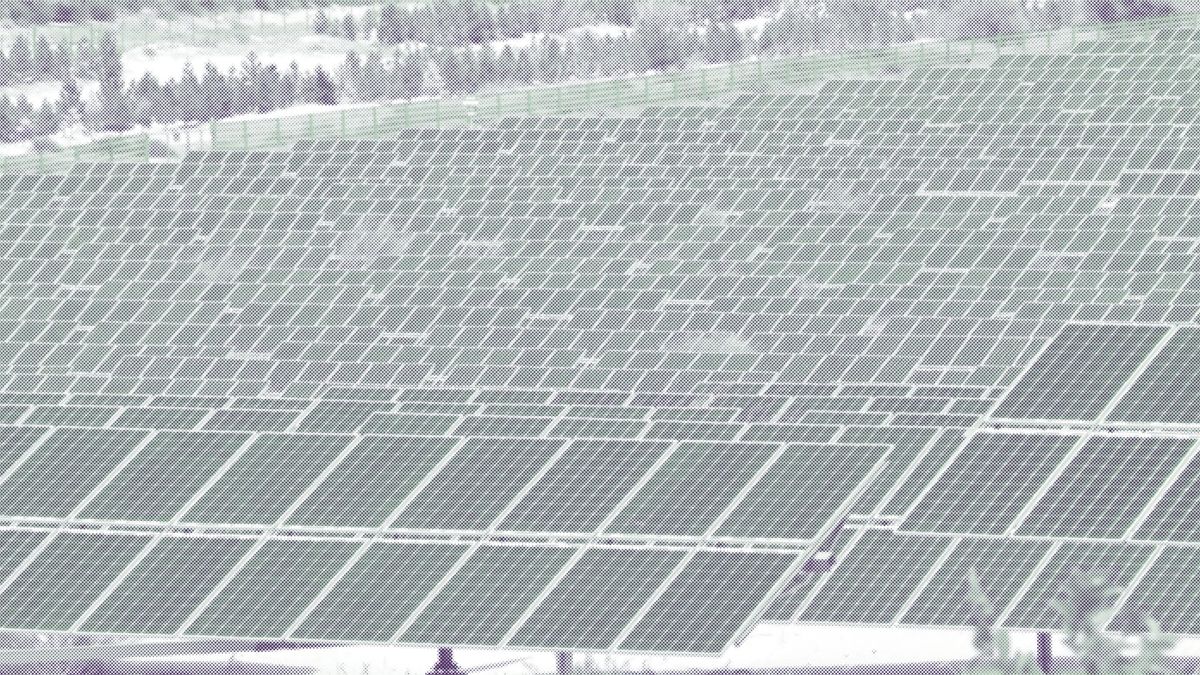
Last summer, I stood surrounded by solar panels stretching in all directions, exultant at being engulfed by the material underpinnings of a better future. Wanting a wider view, I sprinted up a small dune. Sand extended for miles, much of it covered in solar panels punctuated with substations, power lines and maintenance roads. In this arid and windy environment scrub grass struggled to grow, though the plants seemed to appreciate the shade the panels provided. Absorbing the fierce sunlight of Ordos, a city in the resource-rich Chinese autonomous region of Inner Mongolia, the panels converted it into electricity to power not just this community or province, but also distant cities like Beijing.
Nearly two decades ago, Ordos became famous for its ghost city, Kangbashi, a massive new district to the south of the city’s centre. Built as a would-be “Dubai on the Steppe”, it failed to find a human population to fill its vast expanse and the thousands of apartments that had been constructed there. Drone shots of empty streets and ghostly apartment blocks soon proliferated, and Western newspapers were filled with photos of an eerily denuded urban landscape that served as an embodiment of the folly of China’s rapid urbanization. Of the apartments that were bought, many were purchased as investments rather than residences, in a frenzy of speculation without inhabitation. Eventually, property prices collapsed, and over time Kangbashi has become less ghostly. The district now has residents, even if it is not exactly as full as its original developers had hoped. Still, the vastness of Kangbashi has imposed systemic costs on those who live there, trapping them in an unwalkable sprawl locked in place with cement.
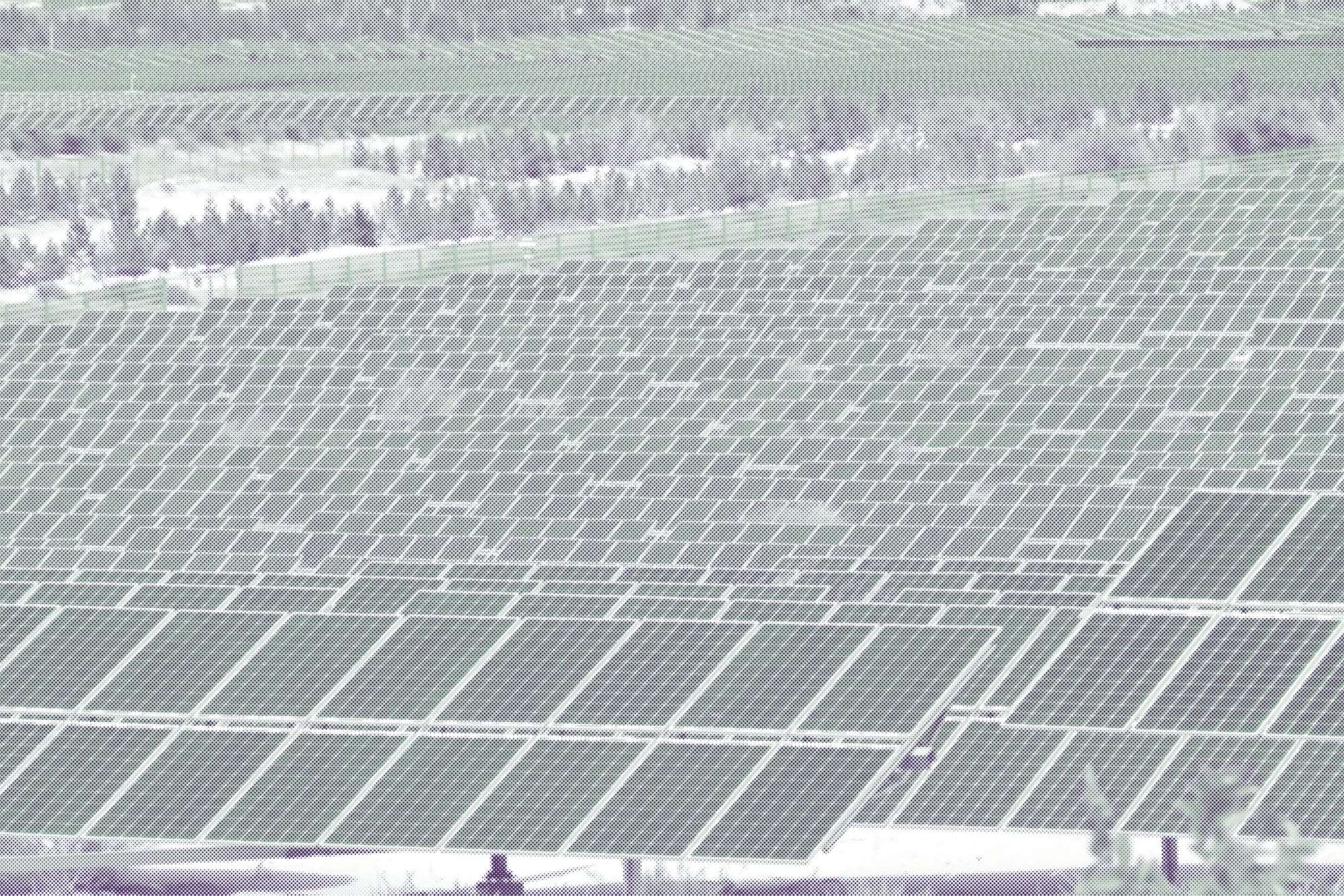
Building is rarely China’s problem. Indeed, with the proliferation of cheap solar, wind and batteries over the past two decades, China’s green tech revolution has arisen largely because of enormous bets placed on building and innovation. But by looking in places like Ordos and the wider province of Inner Mongolia, something far messier starts to emerge. Here, piled on top of one another, are energy systems old and new: solar and wind production facilities and megabases[1] stand alongside new coal plants and vast industrial works that convert coal to chemicals like methanol and plastics—a dirty industrial process meant to replace oil, and which makes already emissions-intensive work even more destructive to our atmosphere.
Ordosmaxxing
In recent years a new meme has emerged in the West: Chinamaxxing, the trend for non-Chinese people to adopt Chinese habits and enthusiastically appreciate the country’s grand strengths. Think of the screen-based ogling of the Chongqing skyline, the country’s giant light-up drone shows or BYD’s sleek new electric vehicles. Zoomed out like this, China becomes “number go up”[2] in country form. It is scale über alles.
The temptation to envy China is an obvious one, particularly for Americans suffering from shortages of housing, clean energy and public infrastructure—components in which China now excels. China is abundance itself, and as such it is looked at longingly by those famed liberal Abundance bros Ezra Klein and Derek Thompson, themselves frustrated by the legal hamstrings that they allege have slowed construction in the United States in recent decades. Nor is Chinamaxxing limited to a commentariat enamoured with building big once more. The recent output of prolific historian Adam Tooze, in numerous posts on his widely read Chartbook Substack, expertly captures much of the action and repercussions of Chinese clean tech building. Likewise Dan Wang, who in his recent bestseller Breakneck: China’s Quest to Engineer the Future, contrasts America’s lawyerly society, stodgy and slow to build, with China’s engineering state, which moves with abandon, breaking things and people along the way. Perhaps nowhere is this kind of breathless enthusiasm more apparent than in the world of climate politics: China, it seems to many, is set firm on a course away from dirty power and into a new one of abundant, clean energy. It is the energy transition made real.
In Ordos, however, we see little evidence of the breaking of King Coal. In fact, Ordos looks less like a transition than an accumulation: the megabases rise, the coal-to-chemicals plants rise faster, and nothing comes down. In this way, the city seems to map onto the analysis of the French energy historian Jean-Baptiste Fressoz: where many see the history of energy as one of transitions, with the world shifting from wood to coal to oil, Fressoz sees each reputed “transition” as dependent on its predecessor energy source for its development.[3] Coal extraction required significant amounts of timber to keep mines from collapsing; train tracks consumed large amounts of wood, as ties required replacement; coal was coked for steel to turn into the drums, tankers and pipelines necessary to move oil across the world. This, he says, is “material symbiosis”, and the result is that cumulatively, our consumption only goes in one direction: up. Subtraction, the removal of the old, simply never occurs. More is, for Fressoz, the law of energy history.
This failure to break away from the old is not an inevitable outcome of physics. Rather, it is written into a place’s institutions, prices and politics. Where those align, the old does indeed come down: Britain shuttered its last coal power plant in 2024 and now burns far less coal than it did three decades ago; California’s natural gas generation this year is down 46 per cent versus two years ago, displaced by solar, wind and storage. Subtraction is not impossible; it is just, often, left undone. And there is no better place to see both the building and the breaking than in Ordos.