

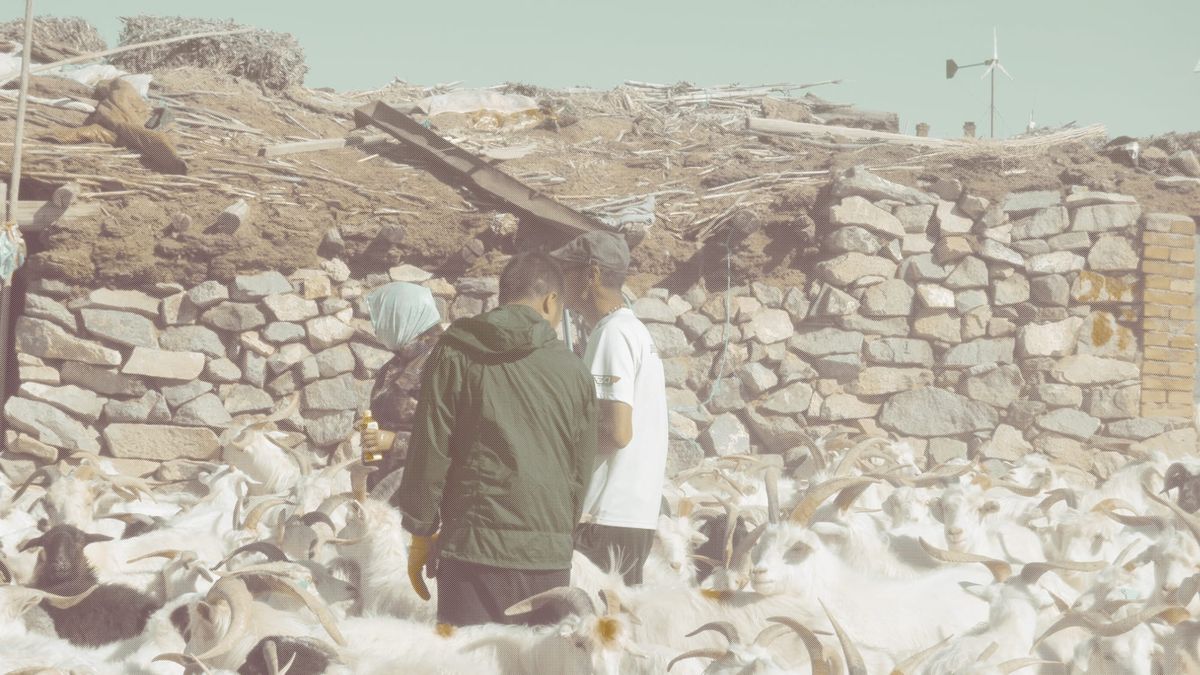
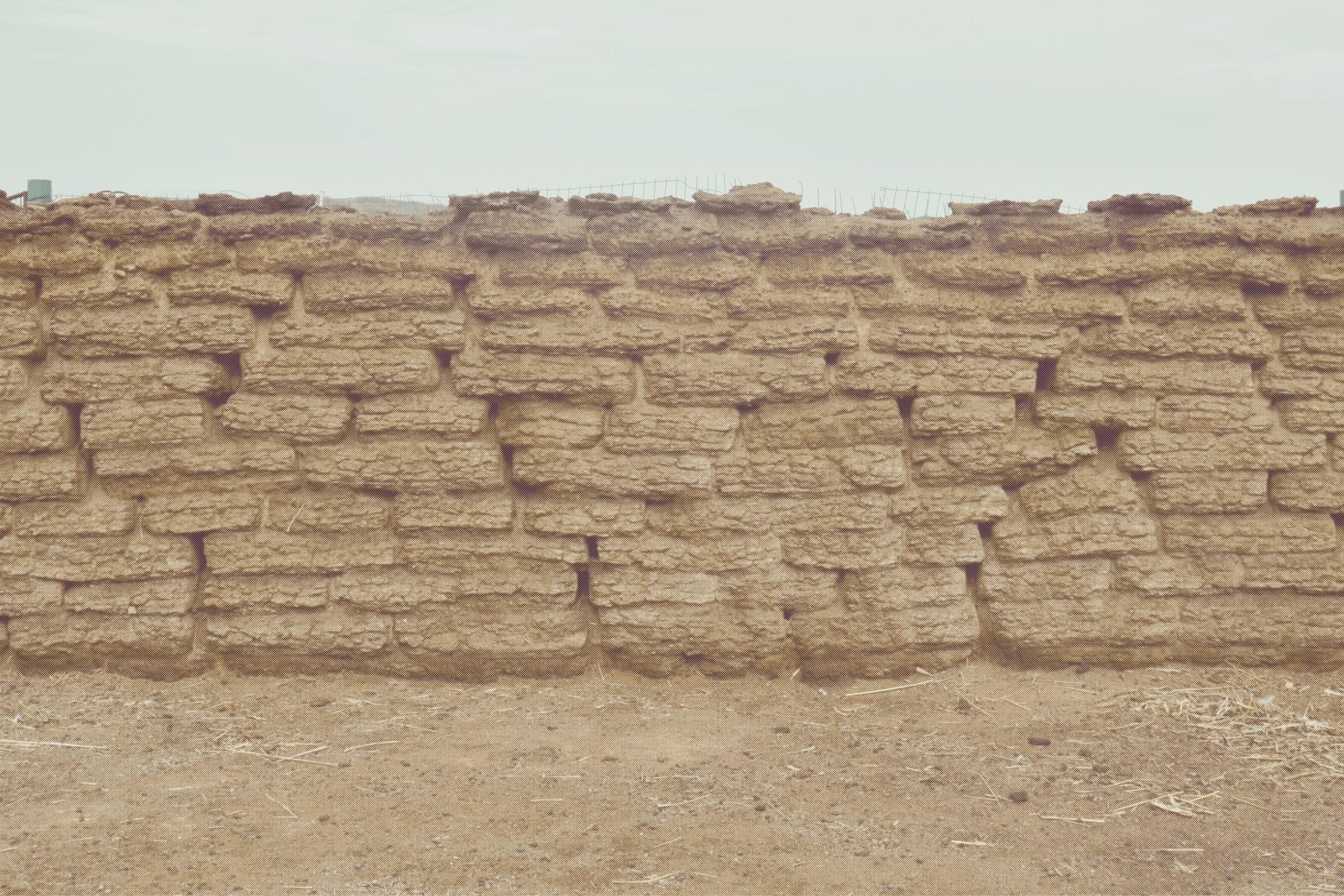
It is the height of the August heat and Ganbold is cutting up the floor of the sheepfold. The floor is made of dried dung, densely compacted by the hooves of his 200 sheep and goats. His spade scrapes as it hits the hard ground before he flings the sheets of dung crust into the back of a three-wheeler. Come winter, when temperatures can drop to below -30°C, this will be a vital source of fuel. Dried dung is also an excellent building material; the dung walls of the sheepfold help retain heat for his animals. Now, however, after unusually heavy rain, there are repairs to be made.
Dung cutting used to be an annual task for ethnic Mongol herders like Ganbold on the arid grasslands of Alasha, in the far west of China’s Inner Mongolia Autonomous Region. Here Mongols make up around 17 per cent of the population, while the majority is Han Chinese. Times, however, have changed. In recent decades the Chinese state has blamed herders and their livestock for the “desertification” of the grasslands, and there are now strict limits on the number of animals that herders can keep. Fewer animals mean less shit and shit that is harder to collect. Such is the pressure, that some herders have attempted to evade the restrictions on livestock numbers, pasturing their herds in remote mountains or in the middle of the desert away from the homesteads and sheepfolds where officials come to count.
It is easy to be captivated by the speed and scale of China’s green transition and its commitment to build a new “ecological civilization”. But China’s eco-developmentalism has other gears, too—something we can see in places like Inner Mongolia, far away from the technological marvels of Shenzhen and Guangzhou. For decades, the everyday lives and livelihoods of farmers and herders like Ganbold have slowly been remade through a range of policy instruments and technologies far more mundane than the EVs and solar cells that fill the pages of the Western press.
Coercive environmentalism
It was in China’s western regions—which cover more than two-thirds of the country and include the vast grasslands and deserts of Inner Mongolia—that the country’s state-led environmentalism was first forged. Since the 1980s, much of China’s extraordinary economic development has been concentrated along its coast in areas like the Yangtze and Pearl river deltas. So, at the turn of the millennium, to rebalance the geography of China’s development, China’s then-president Jiang Zemin launched the Open Up the West development strategy. The strategy’s aim was to reduce the perceived risk of ethnic separatism in the region, which is home to the vast majority of China’s ethnic minority population of roughly 125 million people, while targeting it as a site of environmental degradation requiring “ecological construction”, or the engineering of landscapes to provide ecosystem services for the rest of the country. Part of this involved concerted afforestation efforts, which subsidized farmers to plant trees and retire cropland, and which were first introduced after the devastating floods along the Yangtze River in 1998.
Later, there were more visible signs of the country’s rapid industrialization. As the clock ticked down to the 2008 Beijing Olympics, dust storms originating in the Gobi Desert—an arid expanse of rocky plains that straddles the border between Mongolia and China—threatened to spoil China’s coming out to the world as a global power. Mongolian herders have long raised livestock on the sparse vegetation of the desert, traditionally moving between pastures in a form of livelihood well adapted to the non-equilibrium ecosystems that characterize this part of the world, where the growth of grasses is driven by unpredictable rainfall. Now, though, the Chinese state, drawing on ideas of desertification first developed by French foresters working for the colonial administration in Africa, blamed herders and their livestock for turning the arid grasslands to dust.[1]