

Desert Island Politics
In April 2025, members of the Chinese coast guard stepped onto a small and uninhabited sandbank in the South China Sea. The small landing team was there to carry out inspections of the reef and clear it of litter, but they also took the opportunity to unfurl the Chinese flag and, according to Chinese state media, exercise “maritime control” over the site, known as Sandy Cay. The move prompted little reaction across the world—except in several of the nations that border the reef. Just a few days later, amid joint US–Filipino military drills in the Sea, a six-man team from the Philippines disembarked onto the same stretch of sand and unfurled the Philippine flag.
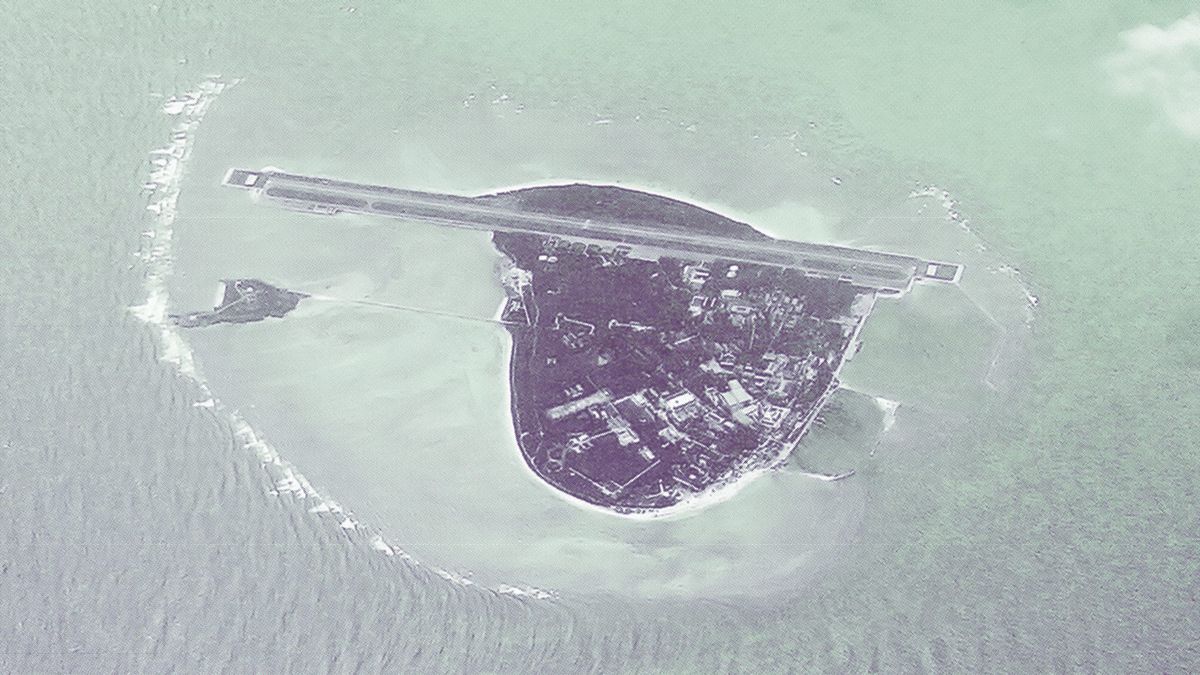
These competing photo-ops were part of a show of national strength over the disputed Spratly Islands, an archipelago of over one hundred islands, islets, cays and reefs claimed fully or in part by no fewer than six countries. In recent years, there has been a ratcheting of such displays, as well as in reactive accusations of the violation of sovereignty and joint proclamations asserting international law. But why have these tiny specks of land in the South China Sea suddenly become the scene of such intense geopolitical rivalry?
The islands have been disputed since at least the post-war period. The thinly populated archipelagos that dot the South China Sea, which include the Spratlys as well as the Paracel Islands, Scarborough Shoal and others, have long been integral for national aspirations, including for the control of the vast amounts of trade that pass daily through the Sea’s shipping superhighways and the billions of barrels of offshore oil reserves upon which they sit. But what really seems to be spurring these contemporary tensions is the growing sense that the “islands” are shifting underfoot.