

Santa Marta Versus Fossil Capital
For as long as the UN climate negotiations have existed,[1] any discussion of phasing out fossil fuels has been blocked by the world’s main polluters. The most recent Conference of the Parties (COP)—the thirtieth, held in the Brazilian city of Belém—repeated a now familiar pattern: a group of countries tried to insert a fossil fuel phase-out into the final text to be agreed, but vehement opposition by Saudi Arabia, Russia and others ultimately prevented it.
So, in September of last year, Colombia used its intervention at the UN General Assembly in New York to announce that it would host a separate meeting: the world’s first-ever international conference on transitioning away from fossil fuels. This, Colombia reasoned, could bypass this blockade and allow some countries to move forward. It was a radical proposition. And on April 28–29 this year, it was realized.
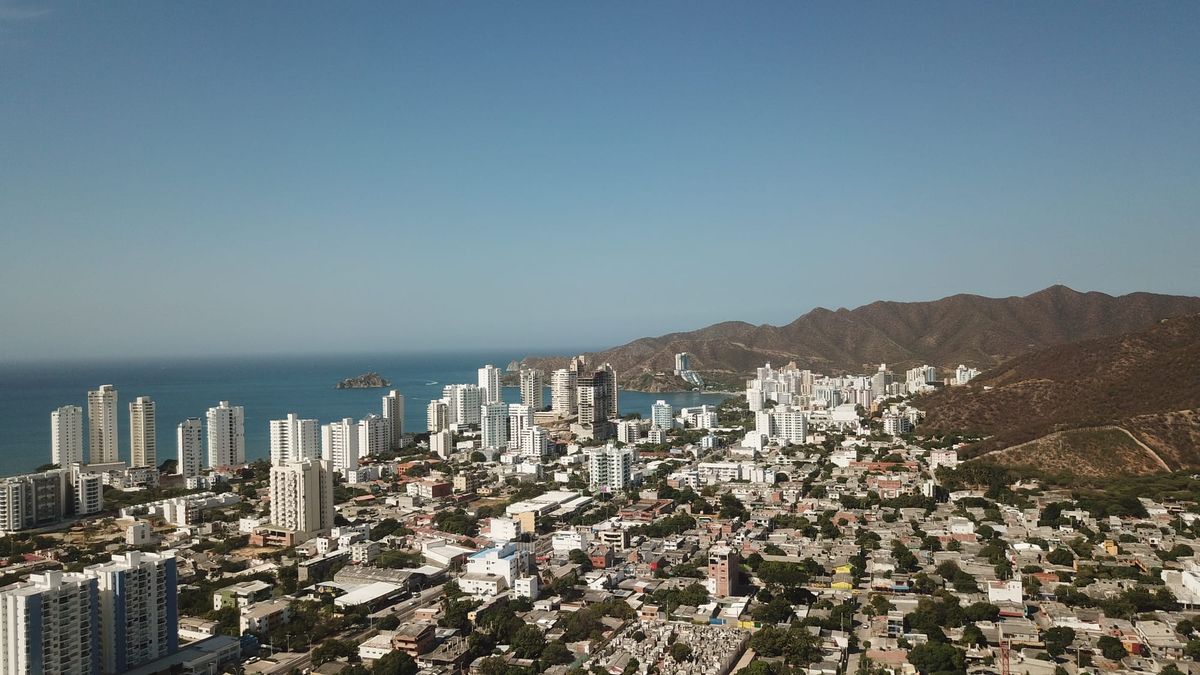
With the “First Conference on Transitioning Away from Fossil Fuels” now concluded in the Caribbean coal port of Santa Marta, we have much to celebrate. Santa Marta changed the fundamental question under negotiation: from a technocratic “By what percentage should countries x, y, z reduce carbon emissions?” (broadly, the terms of COPs 1 through 30) to a pointed “How shall we end fossil fuels?”. It initiated a shift away from a singular focus on managing consumption (or demand) and generated a groundswell of energy and support. This was the change in perspective that the climate movement needed, and which it has been demanding for years. From the first days of the event, it was obvious that this shift in perspective, and the momentum generated by it, would be its greatest achievement.
That momentum, however, could easily be lost. A key relevation at Santa Marta was that the idea of phasing out fossil fuels can mean very different things to different actors. Many European states flocked to Colombia despite their continued failure to realize meaningful climate action at home. While ambitious when compared with the likes of Saudi Arabia, Russia or the United States, these countries’ positions fall far short of what justice demands. Indeed, they seemed to have come to Santa Marta to reiterate the same agenda they continue to pursue at the COPs.
The Netherlands, which co-hosted the event, is a case-in-point. The Dutch are no leaders in decarbonization: the country has long been one of Europe’s leading gas producers. The government closed its largest gas field in Groningen a few years ago only because recurring earthquakes posed a risk to public safety. Meanwhile, the state continues to expand gas production elsewhere (both onshore and offshore) with no phase-out date in sight. The Netherlands also remains one of the staunchest supporters of the widely rejected Investor-State Dispute Settlement (ISDS) mechanism in treaties, which enables foreign investors to sue states for exorbitant sums when they perceive their assets to be at risk;[2] ironically, Shell and ExxonMobil did just that when the Netherlands closed the Groningen field. The present Dutch government, a three-party centrist coalition, has adopted a techno-optimist climate position that combines trust in “blue” hydrogen, “green” gas, small modular reactors and carbon capture and store (CCS) with a commitment to continue extracting fossil gas from below the North Sea.
This tepid ambition also pervades one of the most concrete outcomes of the Santa Marta conference: the call for countries to create “voluntary national roadmaps” for phasing out fossil fuels. Setting aside their voluntary nature, what matters most about these roadmaps is the timeline they set out, and particularly: when will countries arrive at their end goals? The first country to publish such a roadmap, even before the conference concluded, was France, which has promised to end the consumption of coal by 2030, the consumption of oil by 2045, and the consumption of fossil gas by 2050 (though only for energy purposes).
To put this in context: a new study by James Hansen and colleagues shows that, if the pace of temperature rise we have seen in recent years continues, the world will reach 2°C mean warming as early as the 2030s. Letting oil and gas combustion continue for another quarter century, in other words, would push our world well into dangerous overshoot territory. We cannot afford roadmaps that stretch that far. If anyone is allowed some leeway against the brutal timeline now imposed on us, it should not be the world’s wealthiest countries or the largest historical emitters.
This toothless take on phase-out stands in stark contrast to how much of the climate movement defines the term. For the two of us, and for many others, it means the defeat of fossil fuel-based capitalism and its imperialist manifestations: no more wars for oil. What made Santa Marta unique is that this radical perspective was given voice by the leader of the host country. When Colombia’s left-wing President Gustavo Petro took to the stage, he characterized the phase-out agenda as an existential battle against “suicidal” fossil capital.
Petro has taken Colombia further than any other in imposing an immediate embargo on new oil and gas extraction. As Andreas Malm and Maxy Guez explain:
When Petro was on the campaign trail in 2022, he pledged to wean Colombia off fossil fuel production. He would terminate the licensing of extraction projects. There would be no more new contracts for coal mining or drilling for oil and gas. There would be no fracking. Presidents and prime ministers who renege on their vows are legion, of course, but in this case, the election promises have been held to the letter: not a single permit for the extraction of fossil fuels has been issued under Petro’s guard.
This is not to suggest that Petro’s project has been without tensions or shortcomings. Indeed, it has seen plenty of those. As activists in Santa Marta were quick to highlight, the local port is still exporting coal. Nevertheless, Colombia’s ban on new licenses represents a uniquely ambitious, state-sanctioned attempt to close the spigot, illustrating what is possible with a sufficiently audacious leadership, even in a country largely dependent on fossil fuel exports.
If confined to one country, any such initiative is, of course, subject to constraints. A country unilaterally ceasing fossil energy production hurts its own interests (particularly those of the social groups with the closest ties to the energy sector) without necessarily improving the global conditions driving climate change. Hence, Petro’s government has been keen to embrace a new form of climate multilateralism, where the costs of the transition are shared justly. And since ordinary people around the world stand to benefit the most from this transition, Colombia, in the words of its environment minister Irene Vélez Torres, hopes that Santa Marta will launch a new, collective multilateral process that is “more deeply rooted in the people and not just in governments, biases or economic lobbying.”
Sign up to our weekly newsletter, featuring the best new writing on capitalism, nature and the climate.
Beyond Markets
States were not the only actors navigating conflicting positions in Santa Marta. So were the scholars at a two-day academic pre-conference hosted by The University of Magdalena. The gathering’s synthesized findings, the “Santa Marta Action Repertoire (SMART) summary”, are refreshingly bold for a scientific report aimed at influencing policy. It underscores both the necessity of focusing on fossil energy production and the feasibility of phasing out fossil fuels. It proposes dismantling the “legal, financial, and political barriers resulting from fossil fuel lock-in and entrenchment.” It calls for efforts to tackle climate disinformation, greenwashing and “false solutions”, among which it counts fossil CCS, gas as a bridge fuel and carbon offsetting. It recommends a ban on fossil fuel industry advertising and lobbying and on new fossil infrastructure; the phase-out of fossil fuel subsidies; and the neutralization of ISDS mechanisms to allow states to pursue climate and energy policies without the looming threat of major lawsuits from fossil fuel giants. It explicitly says that an energy transition cannot rely on scaling renewables alone, but also requires “bringing down the reinforcing incumbent forces … that maintain fossil fuel dominance.” And it includes ample language on the need for a just transition by addressing the necessary protection of workers and the imperative of “extensive debt cancellation, international trade reform, and equitable international climate funding, technology, and capacity transfers.”
It is rare for such language to come out of an academic conference, let alone one coordinated with a government. This represents a serious victory. Still, could the SMART report have gone further? It says little, for instance, about the need to reduce energy use. This is especially odd given that AI-related investments (notably, the feverish construction of new data centres) have driven a surge in energy demand, making a fossil fuel phase-out more difficult than it already was. SMART also remains largely silent on the issue of “stranded assets” (fossil energy investments which cannot be used, representing lost profits) and the contentious politics that will result from not just halting new oil and gas production, but curtailing existing production as well.
Nor did the SMART report represent all the perspectives arrayed at the academic pre-conference. In a letter written after it concluded, a group of global South scholars took issue with how the whole exercise had been conducted: most of the report (drafted almost entirely by scholars from the global North) was written before the Santa Marta conference began. As they write:
For those of us who joined the academic process in Santa Marta with a genuine commitment to contribute constructively, it was difficult to accept that we had effectively been invited merely to provide “comments” within a very limited format and timeframe, and without transparency, on a pre-fabricated document produced by a closed circle whose composition appeared arbitrary—if not shaped by personal networks and affinities among a small group of white men from the Global North.
A similar dynamic is playing out in another exercise launched in Santa Marta, the Science Panel on the Global Energy Transition (SPGET). The panel was given the task of informing the roadmaps with the best available expertise. And yet its proposed structure stands in uncomfortable tension with the stated need (reiterated by the Colombian hosts) to revolutionize the academic process by transcending disciplinary boundaries, grappling with historical legacies and incorporating distinct forms of knowledge. As presented in Santa Marta, SPGET featured little of this epistemic transformation: its techno-economic assessments might as well have been a product of IPCC Working Group III, long criticized for its narrow approach to socio-ecological change. More generally, too little emphasis was given to the struggles over power this transformation implies. In some of the academic plenaries, speakers dwelled on the capacity of the market to deliver the energy transition. They held that this process was well underway—unstoppable even—with the US-Israeli war on Iran only accelerating this process. Since renewables were now economically superior, some argued, fossil fuel phase-out would follow automatically in time.
Granted, renewables are making impressive and important progress. Last year, over 85 per cent of all new electrical capacity installed in the world was renewable. The year before it was 92 per cent. These are figures that would have been considered difficult to believe even at the signing of the Paris Agreement in 2015. Solar imports to global South countries are booming (thanks to China), and China’s emissions look, for the time being, to have plateaued. This was the picture even before the imperial war launched by Trump and Netanyahu; as enormous volatility and uncertainty continues to plague the oil and gas industry, perhaps the war will mark a permanent turning point for fossil fuel demand, as Fatih Birol, Executive Director of the International Energy Agency, believes.
The problem is that such assertions, like the country roadmaps, may deflate the political urgency required to transform the world’s energy system. They ignore the timeline on which any phase-out must now unfold to keep dangerous warming at bay. Even if markets might scale renewables to such an extent that they begin to meaningfully bend the curve of global carbon emissions, there is nothing yet to suggest that (absent some revolutionary political intervention) they can do so at the speed needed.
A Potential Turning Point
If the process initiated in Santa Marta represents a rare opportunity to reorient the politics around climate mitigation, its radical potential is already under threat. The conference marked the beginning of a struggle over who can claim the terms of the path towards fossil fuel phase-out. That path might yet take us in bold new directions, or it might lead to familiar false solutions. If the process is colonized by liberal and reformist views, we will have gained very little. To prevent this, two things are necessary.
First, we should celebrate Santa Marta as a breakaway—albeit partial—from the COPs, particularly with respect to calling for global regulations regarding fossil energy production. Remarkably, even within the climate movement, there has been some hesitation to frame Santa Marta in this way. As the conference website explicitly states—as if to put higher powers at ease—Santa Marta is not meant as a replacement for either the UNFCCC or the COP30 Presidency’s roadmap (which provides a separate discussion on phasing out fossil fuels). In our view, this is an error.
A vital hallmark of this first conference was its candor. Conversations were not inhibited by the tired, restrictive structures of the COPs and their most obstructive participants. This showed strongly in the conference’s outcomes. By treating Santa Marta explicitly as a partial secession from the UNFCCC, we could help to prevent its agenda from being defined and co-opted by the forces and outcomes of the latter.
Second, we must infuse the Santa Marta process with an acute analysis of power. Phasing out fossil fuels means organizing against those who are in control of them, profit from them and continue to peddle them as reasonable long-term investments. It means taking things away, not submitting the transition to whatever pace the market ends up dictating. In short, it means making enemies and taking sides. A phase-out strategy that wants to do justice to the polluters will be incoherent and ineffective. Fossil fuel dependence will not be overcome without explicit antagonism towards the countries, corporations and individuals deeply invested in its continuation.
The climate movement has understood this, and judging by his opening remarks and his policies, President Petro did too. But many of the countries that gathered in Santa Marta do not. The same is true of parts of the academic community whose work undergirds the ambitions and roadmaps of participating states. The stability and radical potential of this curious coalition will be determined by our capacity to convince them otherwise.
Notwithstanding its limitations, Santa Marta was a pivotal event for global climate politics. We may be at a turning point. This is a moment to be cherished. But for a just, habitable future on this planet, the moment must be seized.
- The first substantive negotiations were held in Rio, Brazil, during the 1992 “Earth summit”, resulting in the UN Framework Convention on Climate Change (UNFCCC).
- For a detailed example of this process and the perverse logics that often underlie the cases, see Liliana Doganova’s essay for The Break—Down, Is The Future Worth It?
Wim Carton is an associate professor in political ecology at the Centre for Sustainability Studies at Lund University. He is the author, with Andreas Malm, of Overshoot and The Long Heat.
Joel Wainwright is a professor in geography at Ohio State University. He is author, most recently, of The End: Marx, Darwin, and the Natural History of the Climate Crisis.