

How to Kill a Drought
In 1963, an epic drought ravaged the British colony of Hong Kong. By the end of the wet season, as four typhoons and their much-needed rains narrowly missed the territory, the city’s reservoirs were at less than a third of their capacity with nothing to replenish them before next year’s downpours. Such was the severity of the resulting drought that the city’s three and a half million inhabitants were forced to wait patiently, often at street hydrants, for rationed supply for over nine months. Those hit hardest were the residents of the territory’s squatter villages, around a sixth of the colony’s population who lived in huts, boats or simple accommodation made of wood, metal plates, asbestos and concrete. For those villagers, a single standpipe for 500 people was common. At its worst point, water was available for just four hours every four days, turning daily rituals like tea and ablutions into luxuries.
Between 1945 and the drought of 1963, Hong Kong’s aggregate water consumption had been increasing by between 10 and 13 per cent year on year, driven by mass immigration from China, as well as the city’s high birth rates and rapid industrialization. This was further compounded by the city’s textile factories, where the washing, dyeing and weaving of cloth used a tremendous amount of water. The city’s new housing estates and the increasing numbers of in-home taps further drove domestic demand.
Such was the scale of the demand for water that newly dug reservoirs proved insufficient almost as soon as they were built. And by the time the government in London realized the severity of the situation, it was too late, while the colony’s financial markets were as yet too small and too conservative to back necessary infrastructural loans. The authorities in Hong Kong thus faced a perfect storm: a chronic shortage of water alongside rising demand and an inability to easily rectify the problem. In response, local authorities imposed rationing and water was imported on a massive scale.
With Cold War tensions simmering, officials feared riots. A letter to the Chinese communist Guangming Daily complained of rich Europeans washing cats and dogs while the poor lacked water for tea. Workers had to wait while richer residents had servants to draw their water from indoor taps. We are living through “a period of extreme peril”, Sir Robert Black, the colony’s governor, told his colleagues. The very existence of the 122-year-old colony seemed to be at stake.
An unexpected source
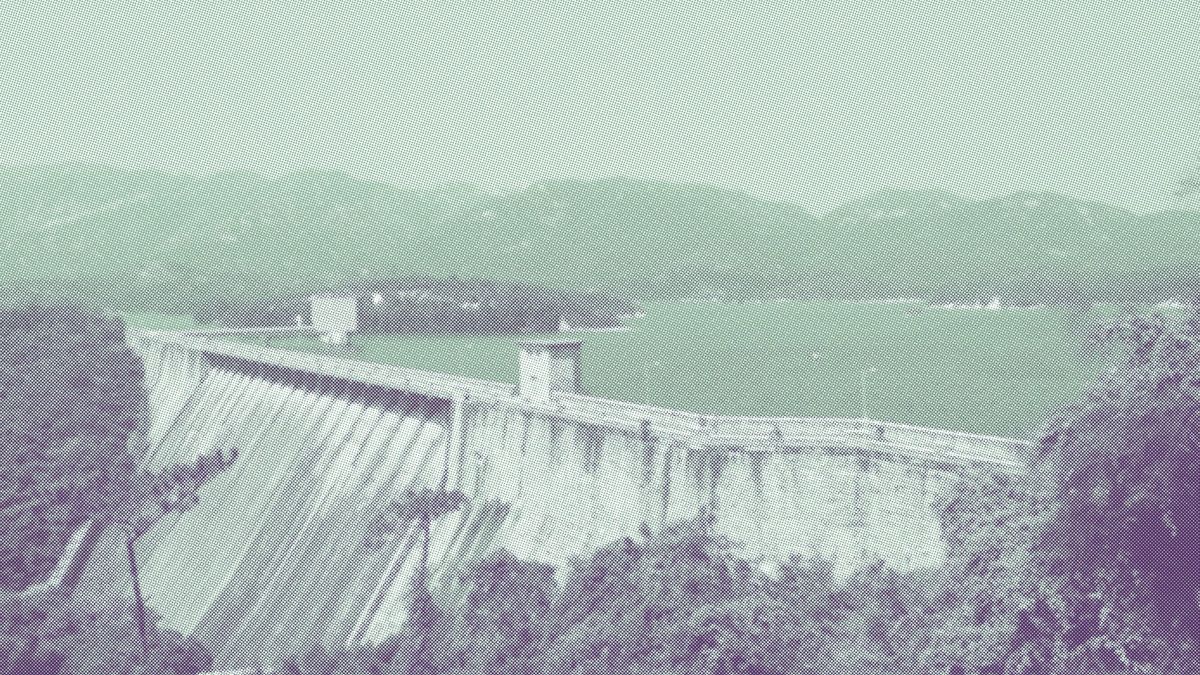
In the end, a long-term solution to the crisis came from massive public investment and an unexpected source. To the surprise of British officials, a mega-project in the People’s Republic of China (PRC) reversed the natural course of the East River (Dongjiang), raising it 49 metres over an 83-kilometre stretch using six dams and 16 kilometres of artificial canals. From March 1965, eight pumping stations, with 32 pumps, began to direct water to the British territory.
Markets had not solved Hong Kong’s water crisis. It was settled by two states—one colonial and one communist—that did something neither London’s Treasury nor Hong Kong’s bond markets could envisage: building infrastructure without making a profit. Conservative fiscal policy and private capital failed to meet the problem; only concerted investment by public authorities secured the future. The combination of China’s 1965 forcing of the East River away from its sea-bound “natural destiny” through locks, inlets and pumps into Britain’s immense Plover Cove—then the world’s largest reservoir built out of a dammed sea inlet—and then on to the taps of Hong Kongers, killed drought for millions of people.