

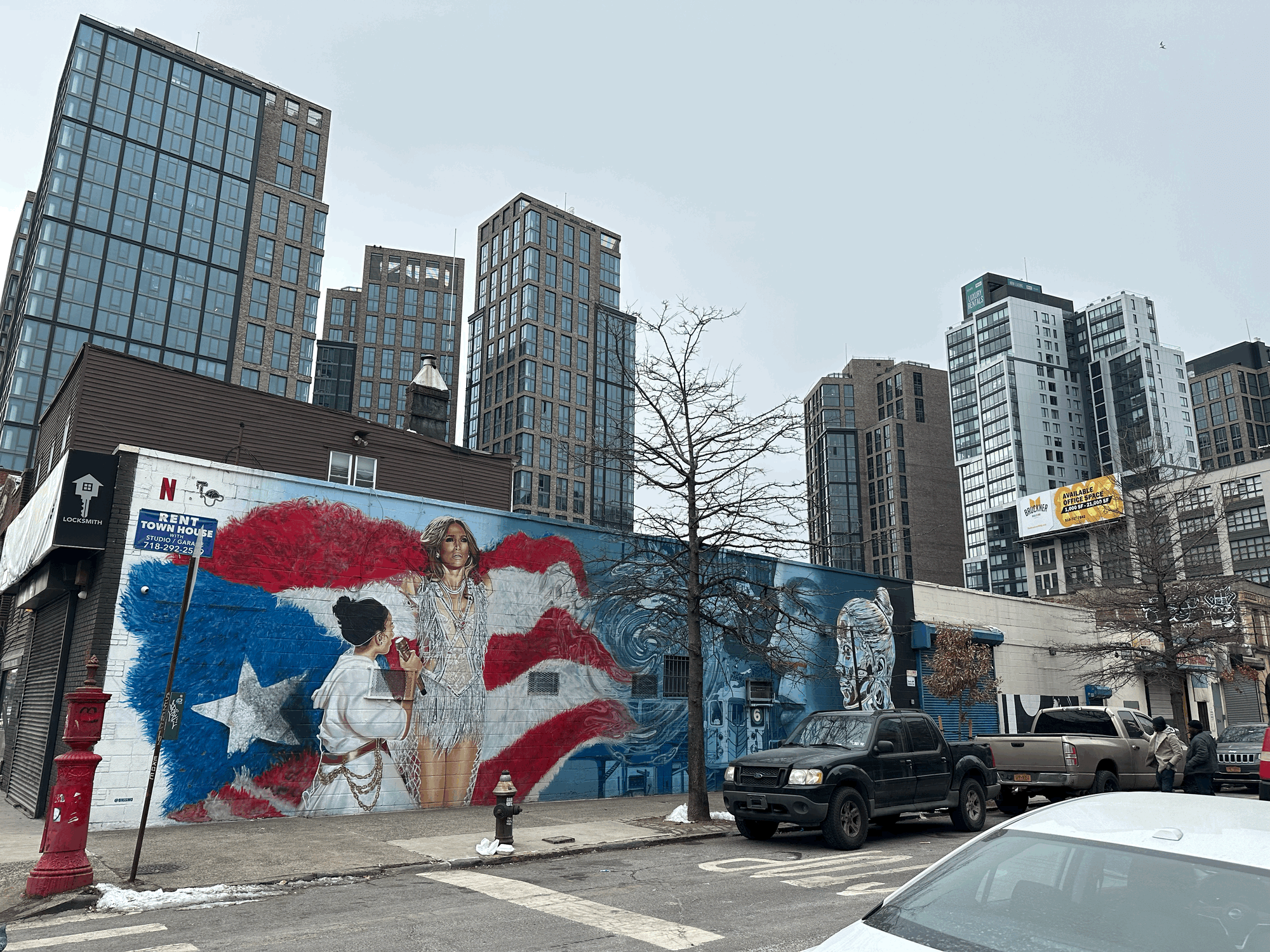
Toxic Soup
Mychal Johnson is in a cheerful mood when I arrive at his office on a frigid Monday in January. He runs South Bronx Unite (SBU), a non-profit organization that works to improve the social, economic and environmental conditions of Mott Haven and Port Morris, the Bronx’s southernmost neighbourhoods and two of New York’s most impoverished areas. When I meet him on the first floor of a nondescript building on Lincoln Avenue, he’s just received an email confirming the final sum of money the organization needs to build a cutting-edge community and health centre seven blocks away.
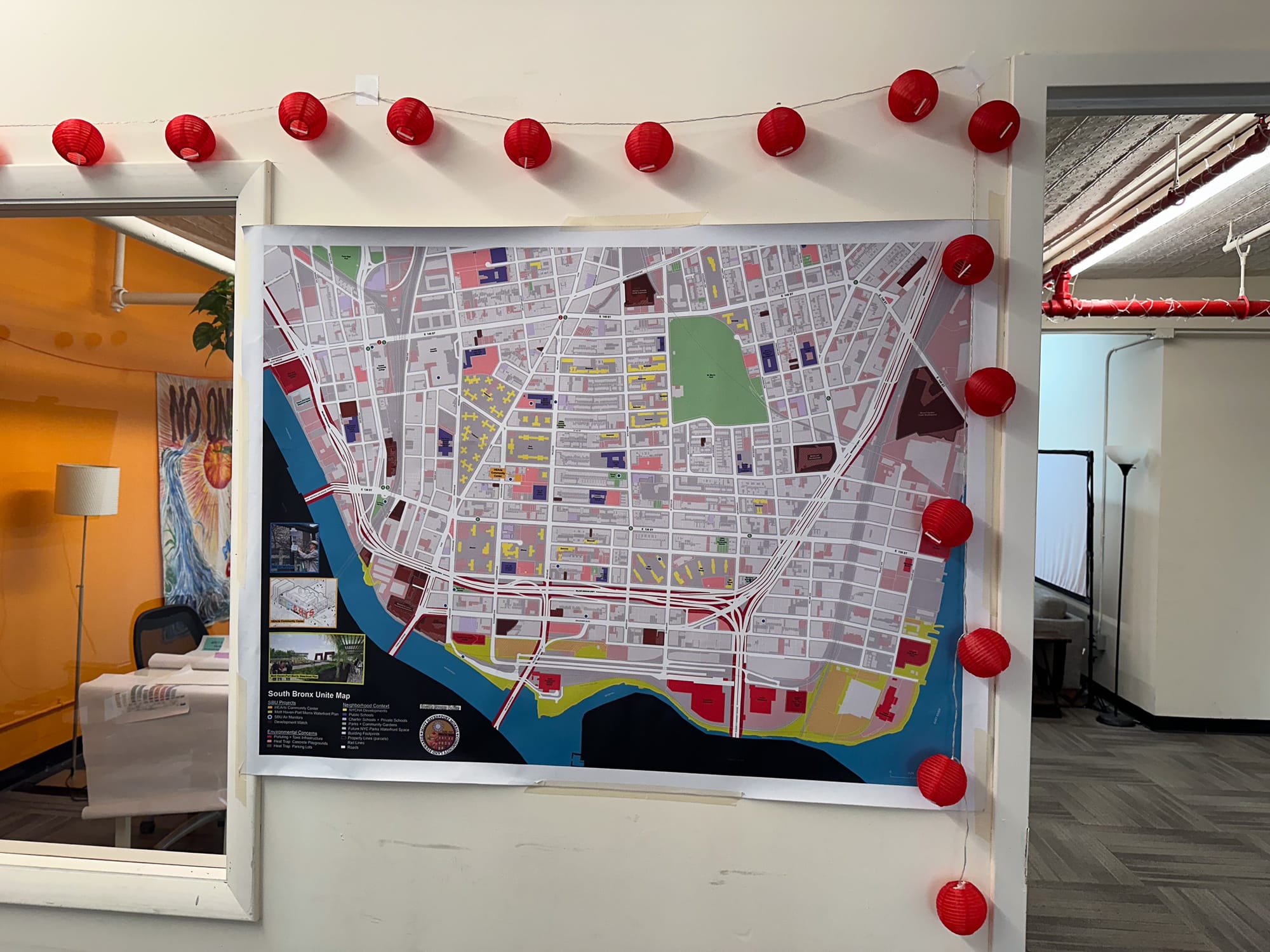
He leads me into the conference room, where we sit at a large table in front of a detailed map of the area under the organization’s purview. The South Bronx peninsula is coloured to demarcate zones with significant environmental concerns—places with high levels of pollution, toxic infrastructure and heat traps. The map also features signs of SBU’s work: blue dots represent the 50 air monitors they have installed, while an orange box represents the location of a vacant detox centre that will soon be transformed into the Health, Education and Arts (H.E.Arts) Center.
Mychal helped launch SBU in 2012 after the announcement that FreshDirect, a high-end online grocer, would relocate its last-mile delivery hub from Long Island City in Queens to the Harlem River Yard, a major industrial property running along the waterfront and bounding the southern end of the neighbourhood. According to Mychal, the move would mean an additional 1,000 diesel trucks passing through the neighbourhood daily, further exposing the 60,000 people who live in Mott Haven and Port Morris to ever higher levels of fine particulate matter, ambient metals and soot kicked up by the area’s dense mesh of industry and road traffic.
When the Harlem River Yard’s FreshDirect Campus was unveiled in July 2018, it joined several other private corporations and state-owned enterprises that were taking advantage of the area’s concentration of transport infrastructure. FedEx opened a distribution centre in the Yard in 2008, running a fleet of hybrid trucks delivering goods to New Yorkers’ doorsteps, while Rupert Murdoch’s News Corp printed copies of the New York Post, Wall Street Journal and Barron’s in the area. New York Power Authority, a publicly-owned utility company, also operated “peaker” power stations in the Yard, providing homes and businesses with energy during periods of peak demand. The flow is not unidirectional, though. The Yard also hosts two waste management sites, where the rubbish from the rest of the Bronx, as well as around a fifth of Manhattan’s, was brought in before being loaded onto freight trains headed for landfills in Virginia.
“The difference between our community and say, Manhattan,” Mychal tells me, “is what’s here, and what’s been relocated here from other locations that have higher real estate values.” Since 2021, traditionally industrial neighbourhoods like Long Island City and Gowanus in Brooklyn have been effectively decommissioned of their manufacturing and logistical capacities and rezoned to accommodate new residential developments. Even Midtown Manhattan, home to the city’s fashion and garment industries, was rezoned last spring in order to accommodate around 9,500 new homes. With increased demand for more market-rate rental housing throughout the city, industrial activities are being concentrated in ever fewer existing sites.
While manufacturing has declined overall in New York, the South Bronx continues to be on the receiving end of capital expenditure, particularly for last-mile delivery and e-commerce logistics, as well as new power stations run by natural gas turbines. These operations are necessary, helping the rest of New York to function and to continue generating the incredible wealth housed in America’s richest city. Yet, for the residents of Mott Haven and Port Morris this is a burden placed uniquely—and unfairly—on their shoulders. Such is the level of ambient air pollution here that the South Bronx is nicknamed “Asthma Alley”, a sombre moniker that reflects the astoundingly high incidence of this chronic respiratory condition among the local population. Children in Mott Haven and Hunts Point have more than double the city-wide rate of asthma-related hospitalizations and visits to the emergency department.
According to a press release published at the time of its unveiling, FreshDirect’s campus was to be “environmentally friendly and highly energy efficient”, and a “state-of-the-art food facility.” Yet, as researchers from Columbia University found in 2020, it brought with it a 10 to 40 per cent increase in traffic with a concomitant increase in black carbon, a tracer for traffic-related air pollution. The consequences of exposure to such airborne toxins, especially for children during crucial developmental windows, can have long-term implications. “We know through our research that cognitive development [is] directly linked to air quality,” Mychal says. “Their built environment is contributing to their [poor] occupational and health outcomes.”
The map on the conference room’s wall features a dozen large purple blocks, representing the area’s public schools. Five of these, totalling some 2,000 pupils, are situated within 500 feet of major roads. In early 2025, the New York State Senate outlawed the construction of new schools within these danger zones, with the bill referencing studies that demonstrated the detrimental impact of pollution on students’ health. Students who attend schools situated next to major roads have significantly higher rates of respiratory conditions, while pollution has a detrimental effect on children’s cognition and ability to learning. These risks are not borne equally in New York State—as the legislation notes, Black and Brown children are disproportionately affected. Across New York City, Black and Latino patients account for more than 80 per cent of asthma-related cases.
“It’s environmental racism,” Mychal says, as he points to FreshDirect’s hub on the map. “They would not have been able to build this in a community that was not of majority people of colour.”
Imbricating Harm
Mott Haven is part of the poorest congressional district in the United States, New York’s 15th congressional district, which stretches from the shores of the Harlem River to the affluent suburbs of Westchester County. The district’s median household income is just $46,000 per year, less than half that of the New York metropolitan area as a whole ($97,000), and sixty per cent of the national median ($78,500). This disparity exists despite the fact that Mott Haven is a just stone’s throw from Manhattan, one of the world’s most concentrated nodes of financial power.
Unsurprisingly, Mott Haven is also one of America’s most heavily segregated neighbourhoods—97 per cent of its residents are Black, Latino or both. This racial segregation is due partly to the enduring legacy of “redlining”, a discriminatory practice pursued by commercial banks and other lending institutions, which denied mortgages and insurance coverage to households in predominantly non-white areas. Although the practice was outlawed in 1968, many American cities continue to bear its scars.
In 1961, a Zoning Resolution was passed by the Department of City Planning that mapped out the city’s manufacturing districts with varying degrees of intensity. The South Bronx was coded as M3—one of the areas with the most intensive industrial uses, “which typically require separation from residential or commercial areas due to their environmental impact.”
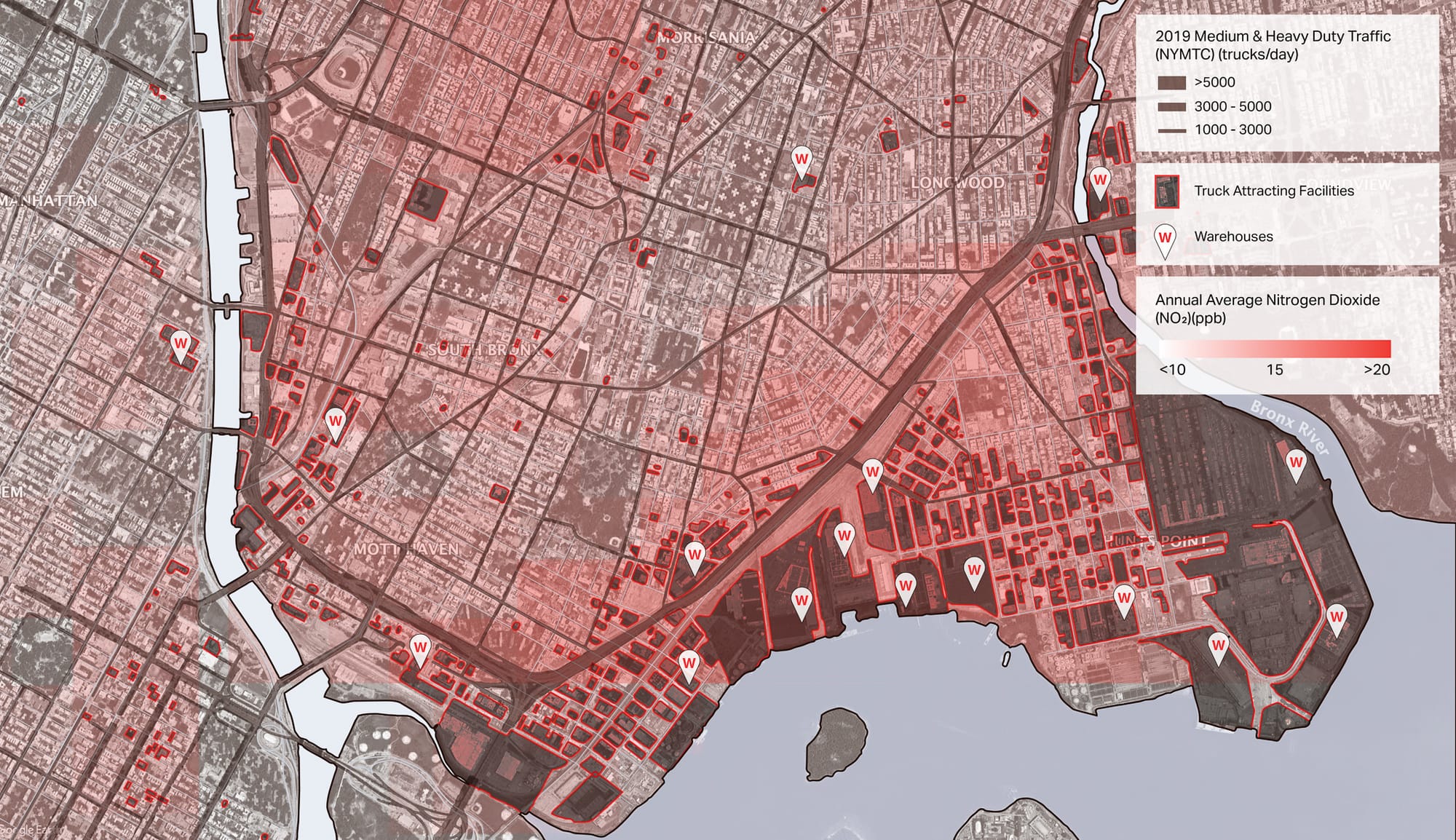
From the 1920s to the early 1970s, notorious city planner Robert Moses played his own role in New York’s racial segregation. Moses carved the city up via a series of large car-centric road infrastructure projects that divided many multiracial communities in two. Throughout this period, Moses spearheaded dozens of public works to inaugurate the parkways, expressways, bridges and tunnels that New Yorkers continue to rely on today. These projects often cut through integrated, multiracial working-class neighbourhoods, destroying Black and Latino homes and businesses—and helped to spur white flight to the suburbs. This legacy is clearly visible in Mott Haven and Port Morris. The Robert F. Kennedy Bridge and the Major Deegan and Bruckner Expressways were all Moses projects, connecting the neighbourhoods to Manhattan, Queens and Long Island.
Energy production also follows along this grim, racialized trend. Redlined neighbourhoods are more likely to be upwind, or within 5 kilometres, of a fossil fuel-burning power station, and they carry higher rates of nitrous oxides (NOX), sulphur dioxide (SO2) and fine particulate matter—all primary pollutants of gas turbine engines. In 2001, the New York Power Authority built six “peaker” stations to top up the grid during periods of increased electricity demand, usually used on summer days when air conditioners whir across the city. Peaker stations are especially polluting, and they are associated with increased rates of asthma, heart disease and cancer as well as reduced lung development.
The two stations that were built locally—one in the Harlem River Yard, the other at Hell Gate Power Station in Port Morris—were meant to operate less than 10 to 15 per cent of the time throughout the year, but that increased after the Indian Point Nuclear Plant, on the banks of the Hudson Valley, was decommissioned in 2021. The following year, the Harlem River Yard power station was in operation for more than 200 days. Recent research from the non-profit organization Physicians, Scientists, and Engineers for Healthy Energy, found that the area’s two stations exert the highest levels of environmental harm of any of New York’s 16 peaker stations.
Dr. Robert Bullard, a professor at Texas Southern University, is often called the “Father of Environmental Justice”. He was one of the principal authors of a 1987 landmark study by the United Church of Christ that found that race was the most accurate predictor for the location of waste facilities across the US, with stronger correlations than factors like poverty, land values or rates of homeownership. He posited in a 2020 interview with NPR that urban planners solely follow the path of least resistance. Toxic infrastructure is built in places where disenfranchised residents won’t mount opposition to their plans. Against this tendency, Mychal sees his role as being to provide a voice to residents, many of whom are unable to attend public consultations or hearings. “Our part is to be really about advocacy, getting information and sharing with the community, to really stand up and to fight back and not be victimised.”
Big Industry is Back in Business
There are, in the American political imaginary, two key sites of deindustrialization: Appalachia and the Midwest; the twin graveyards of post-war Fordist industry. What is often left out of the story is the key role that cities like New York played: once the beating heart of American industrial production, manufacturing drove both New York’s growth and its prosperity. Through the first half of the twentieth century, some fifteen per cent of all US manufacturing jobs were located in the metropolis, a figure that has declined substantially as the political economy of the city shifted towards finance, real estate and the service sector. Even so, New York City today has around 54,000 manufacturing jobs, even if the figure has declined by two-thirds since the start of the millennium.
The US’s transition to a post-industrial economy—with manufacturing jobs getting relocated to sites throughout the Global South, where labour is cheapened and expendable—was brought to the top of the political agenda by Donald Trump during the 2016 election cycle. Now, the American political system’s right, left and centre, along with the political systems of many other Western economies, have made the pursuit of reindustrialization a priority, many for the first time since the advent of neoliberal period half a century ago. Variation exists, of course—Joe Biden used his hallmark Inflation Reduction Act to derisk green industry, while Trump is using tariffs to force overseas multinationals to commit capital investment and reignite the oil and gas industry. But industrial policy is definitely back in vogue.
There is, however, a tension here. As urban planner Katie Mulkowsky writes, “The temporality of urban planning—the distance between a decision and its delivery, and then its real impacts—means that, especially when it comes to environmental health issues, the consequences of top-down land-use rulings might be seen in full only too late, by the generations that follow.” This is the gulf that divides the people who decide industrial policy and those who pay the cost of its environmental burden. New York is the US’s most densely populated city; its manufacturing and logistics sites, integral to the city’s functioning, must exists alongside an often-large local population.
Concurrently, Mott Haven’s unemployment rate is nearly double the city-wide rate. How do you balance the need for jobs with the harms caused by the nature of those jobs? Bearing in mind that only four per cent of working-age residents work locally, this means the vast majority of Mott Haven residents are not employed by FreshDirect, or indeed any of the companies that operate from the Harlem River Yards.
“There was always an idea that [FreshDirect] would bring economic development and job creation for this community, but it never trickled down,” Mychal mentions soberly. The organization, he says, is looking to generate sustainable and environmentally positive opportunities for job training, apprenticeship programmes and workforce development locally. The forthcoming H. E. Arts Center is partnering with the non-profit Green City Force, which helps public housing residents in New York City Housing Authority (NYCHA) developments receive job training in the green sector. Mott Haven is home to the second-highest concentration of NYCHA developments in the city, and is visible in the yellow patterns that look like crop circles on the printed map in front of us. Children who live in NYCHA developments are at increased risk of developing asthma, and New York City neighbourhoods with the highest proportion of public housing had the highest rates of asthma hospitalization.
One of the new projects that South Bronx Unite is working on grew out of a joint studio with students from MIT in Cambridge, Massachusetts, and Morgan State University, a Historically Black College and University (HBCU) in Baltimore. Together, they are developing ideas to transform key sites throughout the neighbourhood, turning them towards green manufacturing and job training. Selected sites include the former NYPD 40th Precinct building and its overflow car park—both around the corner from the subway station where I got off the 6 train; as well as an underpass I crossed beneath the Major Deegan Expressway, and the former printing presses for Murdoch’s News Corp, which was shuttered in 2021.
The total floorspace across all sites is more than 45,000 m2, with the former New York Post Building representing the lion’s share of available real estate. One of the projects, designed by a masters student from MIT’s Department of Urban Studies and Planning, reimagines the former printing press as the principal site of a green workforce hub—supporting green tech start-ups, providing jobs training in retrofitting and landscaping management, and undertaking solar energy generation and battery storage on site to foster the decommissioning of the Harlem River and Hell Gate peaker stations. The hub would be surrounded by greenspace—helping with the dearth of public parks in the two neighbourhoods, where much of the waterfront access is barred to the public and reserved only for industrial use.
The Sightline of American Urbanism
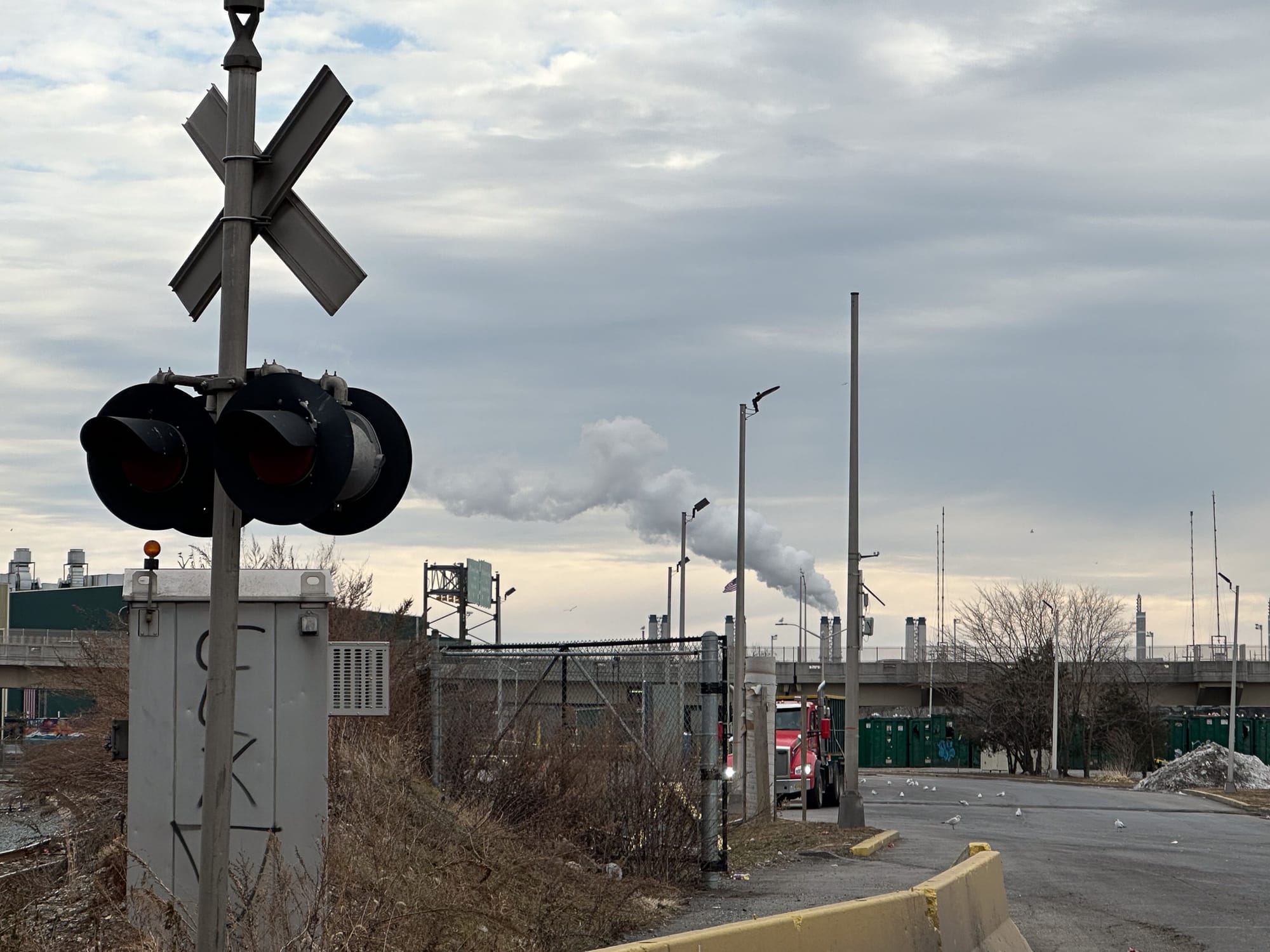
It’s bitterly cold as Mychal and I walk across the tracks of the Oak Point Link, the freight train that shuttles rubbish to Virginia, and towards the gates of the Harlem River Yard. Across the river, the high-rises of East Harlem in Manhattan jut out, wrapped in the trimming of the Harlem River Drive, another remnant of Robert Moses’s influence on the city. Further out, the smokestack of the Astoria Generating Station in Queens belches plumes of toxic air upwind toward the Bronx. As we gaze out on industrial New York we’re interrupted by a diesel truck from Waste Connections, here to dump his latest collection at the Harlem River Transfer Station.
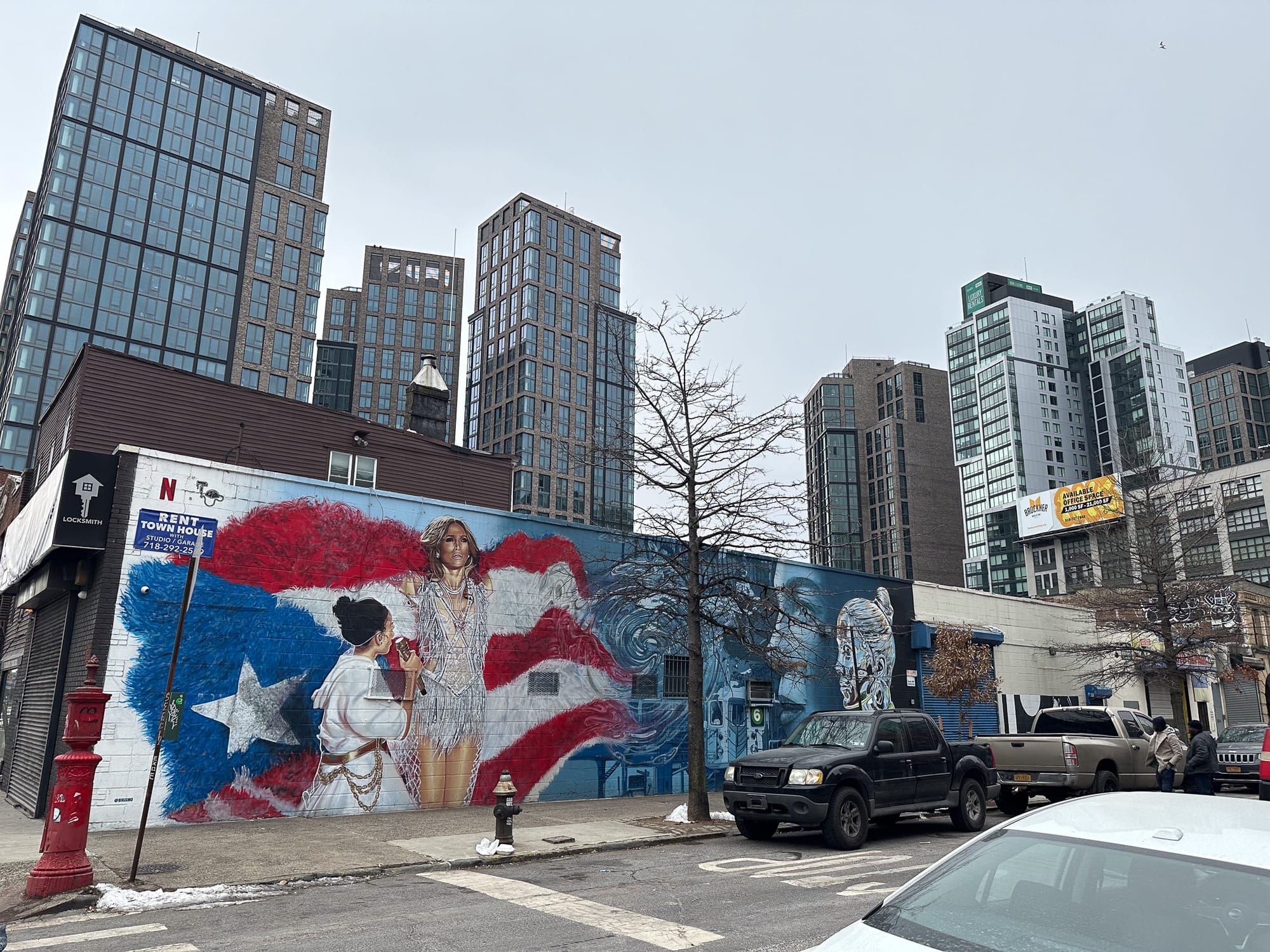
Behind us, luxury housing developments have begun to crop up around the Third Avenue Bridge and along Bruckner Boulevard, wedged between the Yard and the Major Deegan Expressway. Here lies the start of the Bronx’s pitch towards gentrification, Mott Haven’s new developments are just the latest opportunity for private developers to deploy their shock troops: young, middle-class urbanites. There’s something soulless and predictable about these developments, copy-and-paste designs of the kind I have seen on former brownfield sites throughout the West. Rentals here start at $2,500 per month, a huge cost to live one of the most polluted and toxic strips of land in the country.
This stretch of the South Bronx shoreline is also strangely illuminating: an insight into the overlapping policies that underpin how cities across the world dispossess working-class residents, exposing many to ill health and premature death. Economic policy prioritizes the profits of faraway industrial barons while leaving residents to languish. Environmental and health policy is meanwhile marginalized to make way for industry and logistics, the free flow of goods and services throughout the city that never sleeps, as residents of Mott Haven and Port Morris suffocate in toxic fumes. To add insult to injury, local housing policy has shifted to allow for the growth of private developments that residents have little hope of ever seeing inside of—unless it is as cleaners or service workers, perhaps. Meanwhile, islands of crumbling public housing in the distance show the signs of a fraying social contract. The multiracial working class pay the costs of capitalist urbanism, invisible to much of the city around them.
We turn back, travelling north towards the María Sola Community Greenspace, a patch of land named for a local resident whose husband once cared for the plot and has been stewarded by SBU since 2018. Mychal points beyond the park benches, deck chairs and the small borrowing library to one of their air quality monitors. The plot’s chain-link fence is decorated with a painting of blooming flowers. Here, in the slender space, stuck between major infrastructural projects and giant new developments, is a small exercise in a different sort of city. The space represents much of what I’ve spent the afternoon discussing: a fervent insistence that there is a better way of being and of doing, where community cohesion meets improvements in public health and the environment to create the conditions for a better neighbourhood—one that is to be enjoyed by those who actually live there, and not in service to corporate profits in some remote location.
ADAM ALMEIDA writes about gentrification, finance and the economy. He lives in North London.