

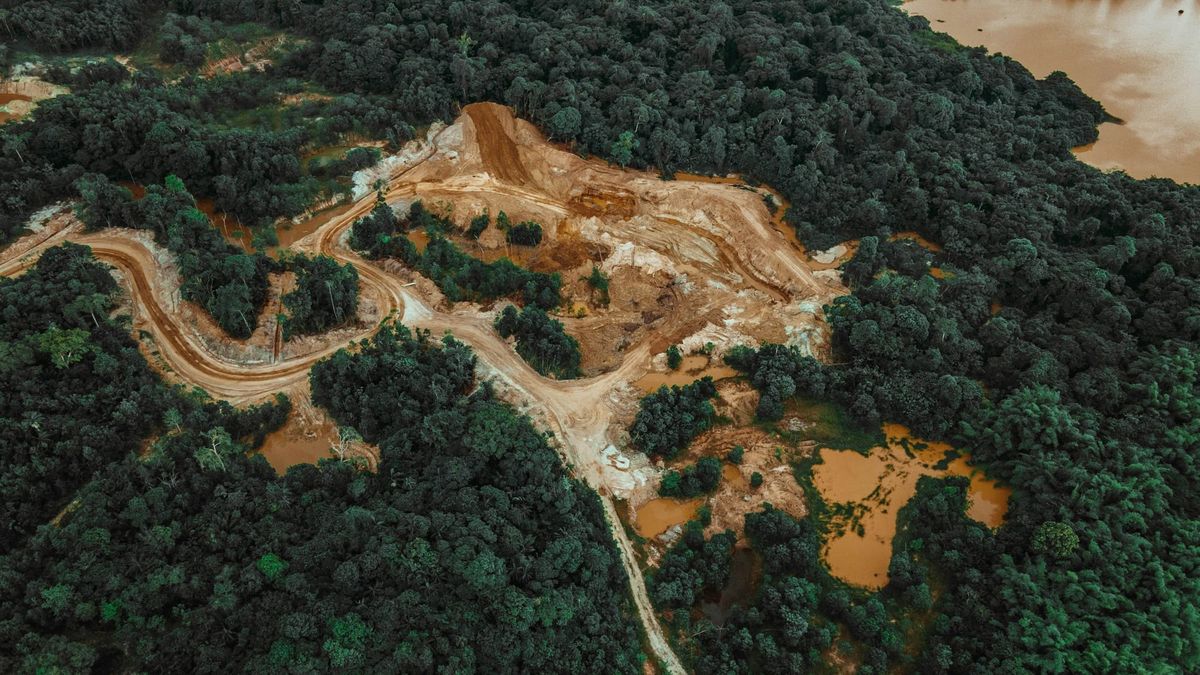
The first case of the disease occurred in the Democratic Republic of the Congo’s remote south-west Kwango Province at the end of October 2024. Six weeks later, there was barely a family that had not been affected in Tsakala-Panzi, the epicentre of the epidemic. 169 people from the village got sick, the disease winding its way through the dusty paths that separate the frequently one-room houses. A feverish temperature, aching body, headache, cough, runny nose: the symptoms seemed to affect predominantly women and children. Just two weeks into the outbreak, the first death was recorded.
Neighbouring villages were getting ill too: Makitapanzi was hit with 142 cases of the unknown malady, while nearby Kanzanji had 78. Some of the patients had been taken to the hospital in Panzi, a basic operation opened under Belgium rule in 1960. Others died in their homes. What worried doctors most was not so much the severity of the sickness, which soon affected around 600 people across the district, but that the symptoms didn’t match any of the diseases that had affected locals in the past. Two years earlier there had been a typhoid outbreak in the area, but this wasn’t that.
The hospital lacked the facilities to test samples from the patients, and as numbers continued to snowball, the national health authorities in Kinshasa got wind of it. There was something airborne, something unexplained, circulating around Kwango: Could it be Disease X?
The World Health Organisation currently lists nine pathogens as a priority for research and resources—diseases that present the highest risk to world health, either in terms of their severity, their potential to spread or the challenges they would pose for containing an outbreak. Some will be familiar: Covid-19, Ebola, Zika and Severe Acute Respiratory Syndrome (SARS) are included, all of which have already caused pandemics or high-profile epidemics in recent years. Other pathogen families of grave concern have less recognition factor outside the public health fraternity or beyond a particular geography: Crimean-Congo haemorrhagic fever, Lassa fever, Nipah, Rift Valley fever. But it is WHO’s ninth priority that is its most mysterious.
Disease X is, by definition, an enigma, representing a pathogen that is not yet known to be an issue: "the monster at our door", Mike Davis, the late writer and theorist, called it in 2005. It could be bacterial or fungal, but it is most likely to be viral; it might be a mutation of something known or it could be a spillover from the animal kingdom. One thing is certain: the climate emergency, together with severe cuts in the WHO’s funding, has kicked the hinges off the door, inviting in another pandemic.
“Disease X raises awareness that there is something coming at some point in the future,” says Esther Hamblion, a British epidemiologist who leads the Public Health Intelligence Unit at the WHO. “You need a piece of terminology. What is it? We don’t know what it is. It’s Disease X.”
How do you prepare for something that hasn’t happened? How do you get funding for something that is by its very nature unknown? The question sounds like an existential riddle, an absurdity that would be comical if it was not so deadly serious.
It’s a puzzle that public health experts are pouring increasing efforts into solving in a world that has seen a steady decade-by-decade uptick in epidemics related to climate change (alongside globalization and the highest number of conflict zones since the Second World War). According to Hamblion:
“We talk about Disease X being something new, but it could be a recombinant of different things. It could also be historical diseases that we begin to see reemerge; older diseases, like diphtheria, that we see coming back in places—that’s a concern. The influenza side of things is always something we’re quite anxious about, but at the same time that is a known area… it’s more being aware of what the blind spots are.”
Take, for example, the current Ebola crisis in the DRC and Uganda (with one case reported in France). It is a disease spread through direct contact, and is a major emergency because it stems from the Bundibugyo strain of the virus, long thought to be less severe than others, thus bypassing the existing vaccinations administered against the more common variants. In effect, it has thrown an unknown element into an otherwise known quantity and in doing so caused untold consequences.
The Abnormal Becoming Normal
For the most part Hamblion deals with knowns: at 3pm every day she walks from her office in the Geneva headquarters of the WHO to a conference room for what is termed the “signals” meeting. Her team of a dozen gather round a long table, with colleagues from six regional offices beaming in on a big screen at its head. It is a room of epidemiologists trained in public health, but within this mix there’s a necessary diversity: some are clinicians, others are veterinarians, and they’re all from different parts of the world, bringing with them an understanding of local contexts. A “signal” could be a notification from a national government that there is something of concern (since 2007, all member states have been bound to report any major incident, though each government makes its own assessment of what it considers “major”) or it could have come from an NGO partner or the media. “We’re actively looking for information, and we go back to countries if we find something they haven’t reported, to ask them to verify it,” Hamblion explains. Yellow fever in Trinidad and Tobago, dengue in New Caledonia, shigellosis in India, tuberculosis in Morocco—the possibilities are endless.
“Everybody brings their signals to the meeting. We then assess them against different criteria and ask ourselves what is normal for that particular time and place. Two cases of measles in the UK, we might be concerned with, but 20 cases we would definitely be worried about. Twenty measles cases in a country that has a lot of measles cases, well, we wouldn’t investigate that because we know it’s within the expected limits. We’re always looking at what’s abnormal.”
In 2024 the abnormal signal was a newspaper article, picked up at the daily meeting, which mentioned the outbreak in Kwango, something the WHO hadn’t heard about from the DRC itself. “After we went to them," Hamblion says, "they could see they weren’t getting surveillance data from that area of the country because it’s so remote.”
Human-induced environmental changes—mass urbanization, industrial farming and, most consequently, global warming—are forever shifting the goalposts of disases. The first of these is both a cause of public health emergencies and a challenge for responding to them. If the villages of Kwango Province are hard to access because of their distance from infrastructure, then mass, chaotic, urbanisation and its dissolution of community networks can also estrange populations from the state, making them difficult to reach in terms of both public health messaging and contact tracing. While coordination from Geneva might be occasionally necessary, a ground-up response that runs on preexisting familial ties, preferably shorn of NGO lingo, is the best form of defence. Infection prevention measures often impede trust, especially if a population is already estranged from or fearful of state apparatus.
Recalling a previous Ebola outbreak in DRC, one clinician recently estimated more deaths were caused by a military-coordinated response disrupting informal commerce and border crossings than the disease itself.[1] On the flip side, one of the most impressive figures I’ve encountered in public health was Domingas Nunes, a 23-year-old nurse who worked in a displaced persons camp in conflict-ridden northern Mozambique. Local to the area, she and a medical technician ably served the area’s approximately 11,000 people living in tented and ad-hoc settlement. A few months before I met in her canvas clinic, mobs had targeted health facilities and her colleagues in the region, whipped up by false rumours that strategies to prevent a rampant cholera outbreak, by adding chlorine to water supplies and the distribution of water purifiers, were spreading the disease. Each morning before her surgery Domingas delivered a lecture intended to counter this kind of fake news, her enthusiasm a factor in winning the crowd over every time. If trust is a major issue in the combatting of a disease with a name, then localized, tailor-made efforts will be even more urgent in tackling a more mysterious outbreak.
The Perfect Environment
As Covid-19 demonstrated with striking effect, pandemics invariably make the poor poorer and the sick sicker. The same might be said of climate change, which is estimated to have been an aggravating factor at some point in over half of the pathogenic diseases we know about. As Hamblion says, “we’re seeing a lot more arbovirus[2] events like chikungunya, mosquito- and tick-borne diseases spread. They’re no longer in the same geographical location as they used to be. We’re seeing more in Europe and we’re seeing outbreaks occur in the countries that have always had these diseases over longer time periods. It’s not just in the traditional seasons that we used to see."
With forests raised and habitats degraded, a result of both farming and a heating planet, humans are brought into closer proximity to previously remote viral reservoirs. Urbanized diets, predominantly meat-based, further the potential for zoological crossover. In all, as one 2022 study estimated, there were 1,006 unique pathways opened up to pathogenic disease outbreaks by climate change, from dormant pathogens defrosted in the melting tundra to vector-carrying bats, rodents and primates venturing beyond their traditional habitats in search of food. Flooding too, can be catastrophic, with the proportion of people living in flood-prone areas rising from 20 to 24 per cent globally since 2000. As the waters rise, so does the infection risk. Together, the issues are so diverse that they are likely to be “too numerous for comprehensive societal adaptations,” the researchers lamented—other than, of course, by tackling the source problem: climate change. As this worsens it creates the perfect anthropocentric infrastructure for viruses to mutate, find hosts, survive and spread with extraordinary rapaciousness.
The WHO isn’t the only body monitoring what’s going on in the world of viruses and bacteria. For the past two decades Nahid Bhadelia has worked as a data scientist on the frontline of infectious diseases. She was part of the international response to the 2013-2016 Ebola virus outbreak in West Africa and acted as a senior advisor within the White House Covid-19 Response Team. In 2025, she cofounded BEACON, a daily–updated database of biothreats and one of the many sources that Hamblion and her colleagues rely on for their incoming signals.
BEACON, operating from within a research unit at the University of Boston, scrapes the news with a large-language-model AI developed by Bhadelia and her team. “We verify all the signals manually,” Bhadelia is eager to point out. “Everything on that website is something we’ve looked into, either through a digital investigation, or we have reached out to our stakeholders in that region.” The resulting data is used to create a ticker tape of disease events, categorized by cause and effect, compiling reports of various outbreaks in near-real time.
“When we started doing the filters and the categories I said we need to have an additional filter that tells you something is climate change sensitive,” Bhadelia recalls. “My colleague put her coffee cup down, and she’s like: ‘but that’s gonna be every single report.’ And I said, ‘Well, so be it.’”
While WHO facilitates its own media scanning programme, which scours local newspapers, radio stations and television news, one of the most important elements of BEACON, Bhadelia says, is that is able to be nimbler than official channels: their tip-offs also come directly from doctors, from labs and from other well-placed individuals and outfits. “Formal disease reporting takes a lot of time. It often starts at the healthcare level. Clinicians and laboratories diagnose patients, they report up to some sort of district or regional body, who report it up to national. The advantage of the informal surveillance BEACON relies on is that it saves time. We can say, quickly: we should figure out what’s going on there.”
Not all delays in reporting outbreaks are unintentional. Last year, the Trump administration pulled out of the WHO, officially citing post-Covid amendments that give the WHO jurisdiction to order lockdowns and travel restrictions, but also as the result of the conspiracy-laden politics of US Health Secretary, Robert F Kennedy. It leaves a US$ 1.284 billion gap in the organization’s budget (a hole compounded by USAID cuts, which affect many WHO field partners), only partially filled by a new gala culture within the organization that relies on private oligarchic philanthropy from the likes of the Bill Gates Foundation or the Chan Zuckerberg Initiative.
There’s a fear that this is engendering a subtle shift in values. Already the WHO largely relies on something called the Global Burden of Disease Metric, produced by the Gates-funded Institute of Health Metrics and Evaluation. This is a “calculative logic” which balances the “costs” and “returns” to health campaigns.[3] The dangers of this are obvious. As an activist who works with leprosy patients in Mozambique—precisely those whose lives are rendered footnotes within the ledger sheet approach—shouted to me over the engine of the battered Toyota we were travelling in: “We can’t compete with the glamour of diseases that also affect rich white people in the West.”
While BEACON receives funding from the Gates Foundation among other philanthropy vehicles, Bhadelia adds, diplomatically, that sitting outside governmental control has advantages. She cites the time it took China to flag the initial outbreak of Covid-19. “We’re apolitical, we are transparent, which is important from the Disease X perspective, because there can be tension there.” Out of the WHO, the USA is now under no obligation to report public health concerns to the body, but whatever the apparent priorities of the White House, diseases previously dismissed and underfunded are increasingly hitting closer to home. “New York reported locally transmitted chikungunya last summer,” Bhadelia recalls. “Florida reported the same a couple months ago. So we’re seeing vector-borne diseases be particularly affected by climate change.”
One Hundred Days
Against political intransigence and more benign challenges, researchers are hoping that AI might also help create new predictive models for outbreaks by feeding in information concerning previous outbreaks along with terabytes of routinely collected climatic and socio-economic data to determine where the next ground zero might be.[4]
While speeding up detection is one thing, if patients cannot be easily diagnosed, solutions can seem impossible. Tim Endy, a US clinician, leads the Disease X research and development efforts for the Coalition for Epidemic Preparedness Innovations (CEPI). “The WHO has a priority list of virus families and pathogens, which the CEPI’s efforts align with,” he says. “But most importantly, we’re focused on the unknown surrounding these known viruses.”
Endy points out that, before it entered the vocabulary of pretty much everyone on earth, Covid-19 was itself Disease X. Vaccines against the new coronavirus were turned round at record speed—the Oxford vaccine arrived at medical centres, rigorously tested and safe, in just 354 days (vaccines normally take years in development), the result of a huge concentration of resources and energy from health bodies, governments and pharmaceutical companies. CEPI now has an even more ambitious target: that it will facilitate a new vaccine to fight an as-yet-unknown pathogen in under a hundred days.
But, if you don’t know what you’re fighting, how can you possibly find a solution? “We know that viral families are important for Disease X emergence, so if we take 25 viral families that we think are the highest priority in terms of a Disease X, we can establish the genetic knowledge behind each of the viruses,” explains Endy. The 25 virus families are then ranked “through 36 different risk factors between host, virus and environment”, for which they use large language modelling. That is an enormous amount of data to process, not all of it biological but also relating to climate change, population movement, geography, economic development and animal-to-human behaviour. The result will be, Endy hopes, an exhaustive set of AI-generated, lab-tested and verified antigen designs, responding to all conceivable scenarios. From there, the next step would be to model the makeup of possible mutations, getting to the first preclinical trial stage for even more hypothetical vaccines, even if the disease they are combatting isn’t yet known to exist.
You could call this speculative medicine. Endy uses the example of the arenavirus family, which is known to cause diseases including Aseptic meningitis and Lassa fever. “We’re creating the knowledge base for the entire arenavirus family, because there are a lot of events that are happening in that family in terms of how they combine, recombine, how they change, how climate change is inducing certain arenaviruses.”
Given the number of variables, modelling every possible eventuality would take years of human labour and resources. In this case, artificial intelligence provides a solution. “That applies to everything that we’re doing. For example, with Nipah, it represents the paramyxovirus virus family, which is hugely diverse. Measles is part of that. What happens if there was a recombination event between a measles and a nipah, or a measles and a related virus? That’s kind of a horror story that you can write a fiction novel about, but we are preparing for the fight.” All this data will be entered into CEPI’s Vaccine Library, with the sequencing stored at the Argonne National Lab, one of the largest supercomputers in North America. There are plans to duplicate the files across several different countries, with some elements publicly available, while much of it will have to be kept hidden behind layers of biosecurity. “We don’t want people to go crazy with the stuff and misuse the information,” the professor says reassuringly.
Don't Miss a Thing
Hamblion estimates that her teams hear of between four and five hundred events every year, of which around 150 cases are serious enough for the WHO to put out an all-country alert. The most worrisome get classed as “public health emergency of international concern”, the 2026 Ebola outbreak being the ninth of these in the last twenty years. Of these, around 150 cases are serious enough for the WHO to put out an all-country alert. Within the 150, approximately a third are not immediately identifiable; with adequate resources, they are able to find an explanation for around half. Those that remain a mystery are mostly disease outbreaks that have ebbed away, or where patients have died before testing could take place.
Despite this, Hamblion is confident the WHO have not missed anything. Once the signal was received in Geneva from Kwango, it took two days for local health officials and WHO colleagues to travel to the province, bringing aid to the patients along with testing kits, so that they could see what they were facing. Of the dozen samples collected and taken back to labs in Kikwit and Kinshasa, hundreds of miles aways, ten tested positive for malaria, with doctors noting that the most severely affected patients were considerably undernourished; though malaria is common is the area, cases of hunger had been worsening of late. Further research revealed that 28 per cent of samples proved positive for influenza, with additional signs of human rhinovirus and SARS-CoV-2.
Between them, the WHO and the DRC government had an answer: this time, it was not a new disease, but either severe malaria with a known viral infection and malnutrition or a known viral infection alongside malaria and malnutrition. “We get quite a lot of things that don’t end up being Disease X,” says Hamblion. “We’re still concerned about it, though, because it’s something unusual that is happening.” Endy agrees, “Will something emerge in the next six months as another Covid causing a global pandemic? I don’t know, and that’s what scares me, and that’s the motivator to prepare for it."
Oliver Basciano is a writer and journalist based in Minas Gerais and London. His first book, Outcast: A History of Leprosy, Humanity and the Modern World is out in paperback with Faber (UK) & Graywolf (US).
- Robert Okello, 'Epidemics and the military' at the Re-thinking Pandemic Preparedness seminar, 17 June 2026, LSTHM.
- A virus spread to humans by arthropod vectors like mosquitoes, ticks and midges.
- A point made by Annabelle Littoz-Monnet.
- In this way, it would act like a much more complex, multifaceted version of the London cholera map John Snow pioneered in the 19th century, that identified a specific water pump as the cause of a 1854 epidemic.