

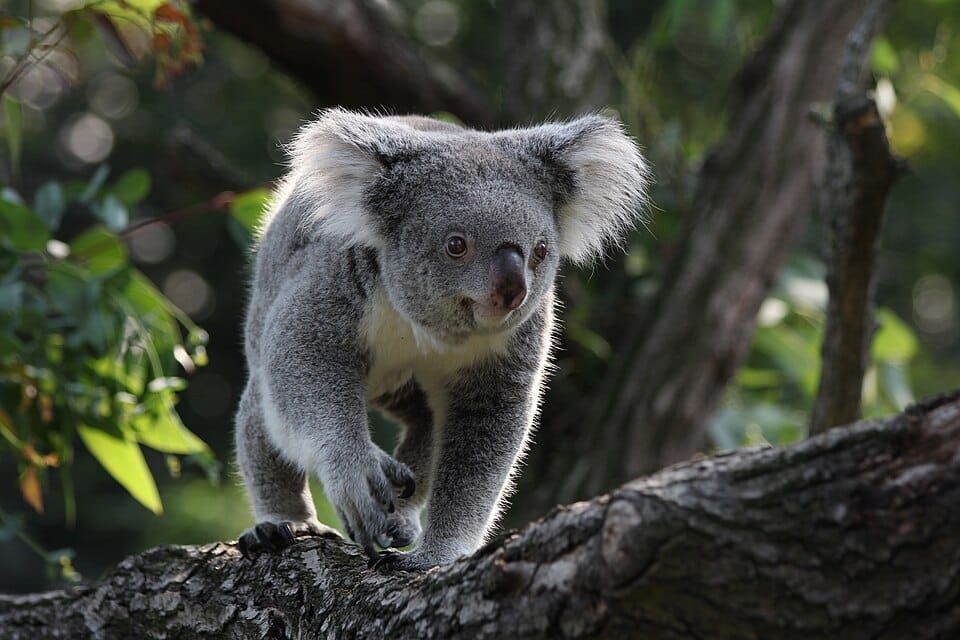
In the northern regions of Australia, somewhere between two-in-three and nine-in-ten koalas are infected with chlamydia. Over the past three decades, the infection has ravaged the species, leaving the customarily chunky marsupials emaciated and many of the females infertile.
While the infection itself has proven existential for the species, increasingly koalas are finding themselves within a perfect storm of threats. Alongside the infection, land clearing, habitat fragmentation and, increasingly, a more extreme, less predictable climate have affected their populations.
And yet the crises affecting these koalas aren’t distinct. Hot weather, drought and habitat loss have been shown to increase rates of chlamydia transmission within the species, leaving populations more vulnerable than ever before. We asked Mark Krokenberger about koalas, chlamydia, and what this unexpected story can teach us about the interconnectedness of ecological crises.
Rob Corsini: What happens when a koala catches chlamydia, and why has chlamydia become such a problem for koalas as a species?
Mark Krockenberger: Chlamydiosis is transmitted primarily at mating, although it is likely that transmission from dam to joey and fighting between males could also occur. On contact between the organism and the new host, the chlamydial organisms attach to epithelial cells lining the reproductive tract and enter the cells.
Unfortunately not enough is known about what a successful koala immune response looks like, but an unsuccessful immune response ends up with fibrosis and scarring of the lining of the reproductive tract. This is particularly devastating in females, where it leads to infertility.
It is this contribution to infertility that can make all the difference ot koalas being able to respond to other threats.
 Adrienne Buller
RC: A 2021 report written by the Australian government found that when koalas are exposed to stressful environmental conditions, chlamydia spreads more quickly. For example, in the aftermath of the 2009 and 2010 heatwaves and droughts, chlamydia cases doubled. How is an increasingly extreme environment interacting with this crisis?
MK: Our experience has definitely been that heat and drought events have escalated the prevalence of chlamydiosis in koalas. In fieldwork since 2008, we have observed the direct impact of these events on mortalities, as well as the consequent increase in the disease through a reduction in host resilience.
In the past, these climate events were less frequent. But the difference we’re seeing now with the habitat fragmentation superimposed on top of the illness is that populations can no longer recover between events.
Work done by colleagues on koala hospital admissions also supports increased hospitalisations with increases in rolling 7 day temperature averages. It can only be expected to worsen as temperatures rise.
RC: Some people have said that koalas are in the middle of ‘a perfect storm’ of disease, climate change, deforestation and, increasingly, bushfires. These pressures are all disparate but impossible to detangle from one another. How do you create a conservation strategy that responds to myriad threats at once—and how is that made more unpredictable by climate change?
MK: Being a scientist interested in complex host-pathogen-environment interactions, the concept of the interactions amongst multiple factors is not alien.
Animal health and resilience is reliant on nutrition and their habitat, which are affected by climate change through increasing heat and drought events. Shrinking habitat makes individuals and populations more susceptible to random events, so a disease like chlamydiosis with a high transmission rate resulting in infertility becomes an issue that needs to factor into all planning. For instance, when planning a strategy to preserve genetic diversity in populations, in some areas the risks of disease transmission may alter common strategies like habitat connectivity.
As the less predictable threats associated with climate change become more predictable, a more complex approach that includes preservation of habitat, animal genetic diversity and disease transmission needs to be enacted across the range of the koala, with local adaptations that recognise local aberrations in the relationships amongst these factors.
Mark Krockenberger is Professor of Veterinary Pathology at The University of Sydney, Australia and Fellow of the Australian and New Zealand College of Veterinary Scientists. He has collaborated with ecologists in koala disease research for the past 30 years.