

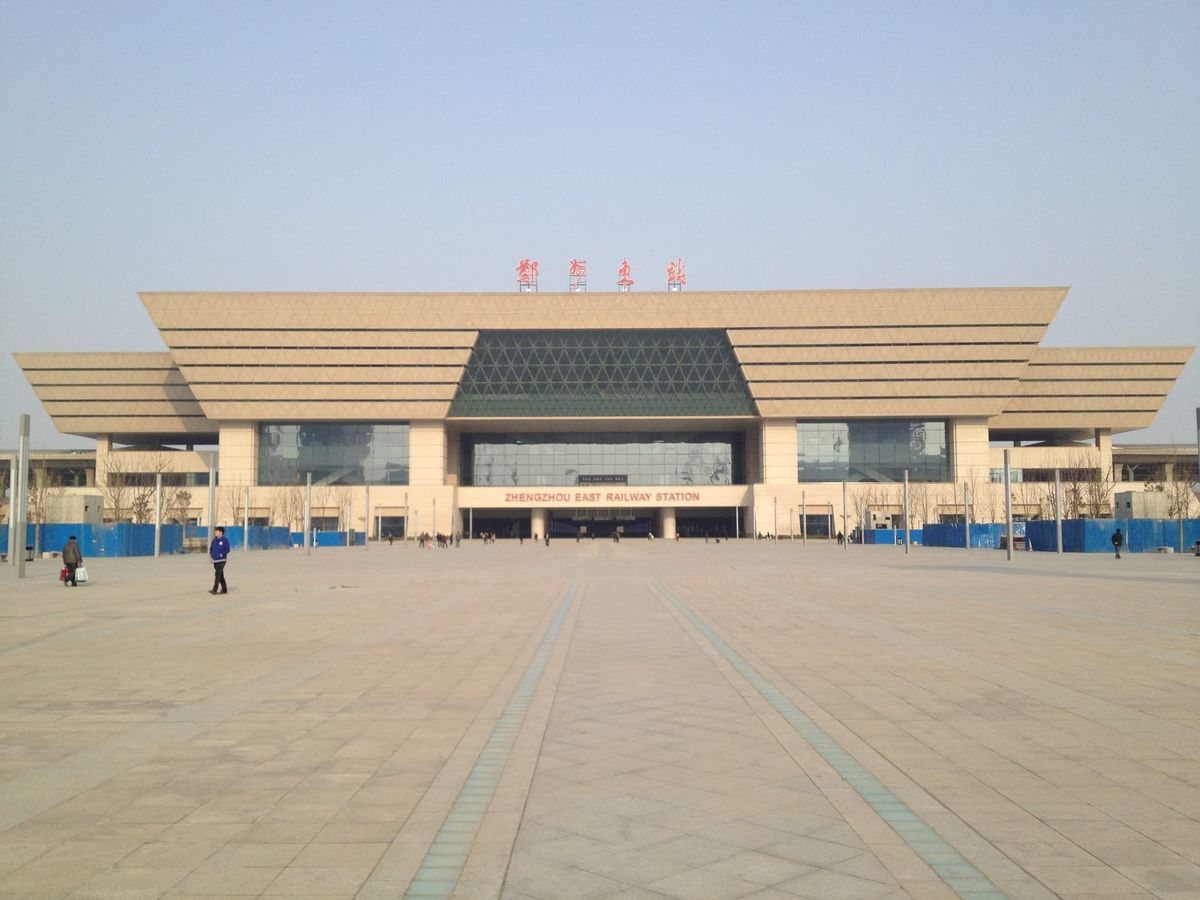
Returns to capital are the cornerstone of the American economy. Money flows to projects, companies and ideas where it can be most profitable and where it can generate the greatest financial return to the investors; areas that lack strong expected returns struggle to raise money and remain unbuilt. The Chinese economy is very different. There, capital is not so beholden to profit expectations. Six months ago, western media reports were agog at the scale of expansion at the Chinese EV giant BYD’s “gigafactory” in Zhengzhou, which would they claimed be “bigger than San Francisco”, even though the firm’s financials were on flimsy footing with their sales slowing and profits collapsing. By February 2026, BYD’s factories in China were only operating half the time.
In China, unlike America, capital is comparatively undisciplined. It flows even without high expectations on returns. In mainstream economics this lack of capital discipline is seen as a problem. Without discipline, the thinking goes, capital is allocated inefficiently; money moves toward purposes that produce smaller returns than it theoretically could get if it were allocated more efficiently. The Chinese state-owned enterprise (SOE) is a classic example of this: for decades, firms like the automaker First Auto Works (FAW) and Angang Steel received preferential treatment from state-controlled banks and capital markets despite—in the polite language of the World Bank and the UN—their mediocre returns. This, to put it more bluntly, was the equivalent of setting money on fire, with their huge workforces making products that the market simply did not demand. From 2010 to 2015, FAW threw over thirty billion RMB (£3.25 billion) at R&D for just two models for the iconic Red Flag brand (Hongqi), only to see miniscule sales.
It was precisely this kind of waste that was, until recently, the standard economic complaint about Chinese investment decisions. In the past few years, however, something has changed. While capital going to places where it fails to produce returns for investors and lenders is still seen as the primary issue, now, both inside and outside the country, the stress has shifted from inefficient state-owned sectors to those plagued by “overcapacity” or involution (内卷). No longer is flabby state-owned indiscipline the scourge, but destructive hypercompetition. Chinese real estate, steel, EVs, polysilicon, solar panels and more all operate in worlds where, amid massive supply capacity, profits have evaporated from intense competition.
At the same time, firms in these sectors have grown to world-changing proportions. Chinese investments may generate minimal returns to capital, but they still produce substantial benefits. Workers get jobs, consumers get cheap products and competition helps push technologies forward—the glut of cheap solar, batteries and EVs might even help save the world. While a Nero-like would-be-king sits atop a faltering if still dominant global hegemon determined to burn the global order to the ground, and with an increasingly chaotic climate system fuelled by carbon emissions pushing towards its own entropy, excess capacity can even start to smell like resilience.
Is it time, therefore, that we expand our perspective on returns? Investment necessarily involves trading expenses today for production and returns tomorrow. But whose returns should we consider? Should it be only the funders of investment—the returns to capital—or should we consider the benefits of additional supply for a broader population of citizens, what we could call “returns to capacity”?[1] And, if we take this more expanded view of returns seriously, what are the implications?
Returns to Capital
If China needs to reform its financial sector, then it is often the US that serves as the model capitalist economy against which it is held. Over the past twenty-five-odd years, however we have seen in blatant terms where this story of American capital discipline against Chinese profligacy fails: innumerable in that time have been the charismatic white guys given billions of dollars of Silicon Valley VC money to squander. California's start-ups may do the squandering with a little more flair than a Chinese SOE (their being capital-light software as opposed to capital-intensive heavy industry also distinguishes them), but in both cases the result is much the same: ashes, and little else.
The American fracking boom of the 2000s and 2010s exhibited a similar trend, driving a rapid increase in drilling for oil and gas, though conspicuously not profits for its operators. As Yakov Feygin and Advait Arun have noted, in the decade to 2020 US oil and gas companies recorded around $342 billion in losses while “North American shale oil and gas developers had over $189 billion in negative free cash flow (the difference between their cash flow from operations and their total capital expenditure).” If the boom did not drive profits, what it did do was keep supplies of US oil and gas in surplus and prices low for consumers, while also becoming a kind of Rube Goldberg machine transferring capital from investors and banks to American households and energy users while sticking a knife in the American coal industry. The fracking boom, seen this way, was a kind of “productive bubble”, in which investments reshape the economy even if they do not generate returns to capital.