
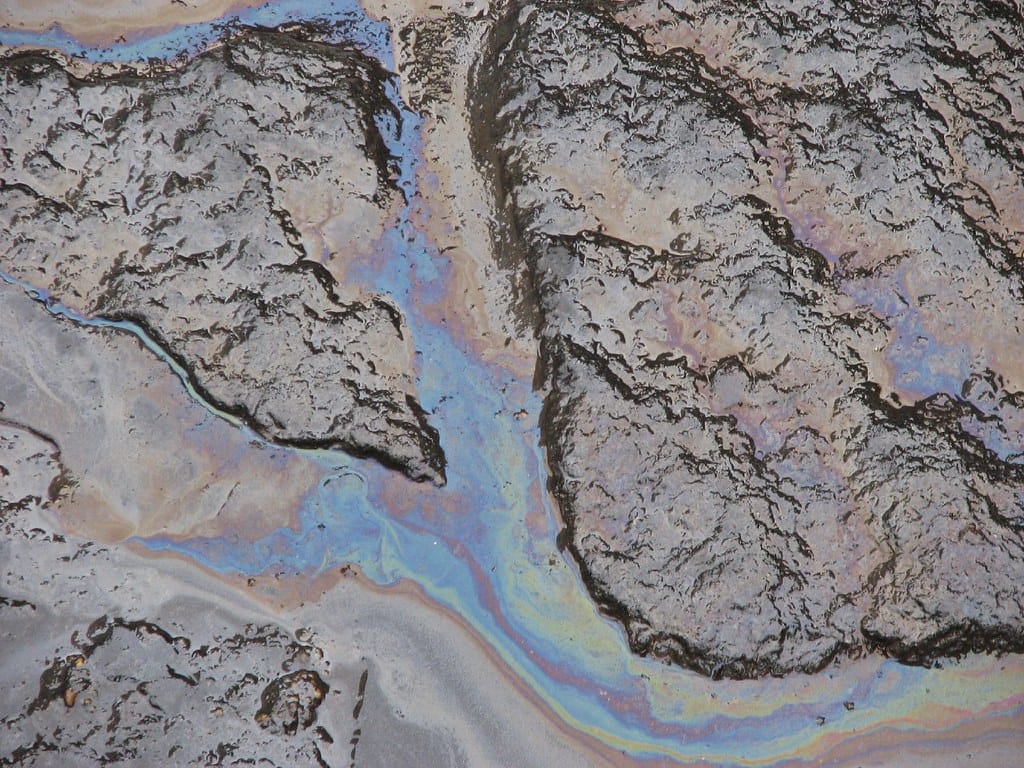
Oil War
Responses to the American-Israeli war on Iran
The first in a series of responses to the American-Israeli war on Iran, from Toby Craig Jones and Guy Laron.
Oil, Empire, Palestine
By Toby Craig Jones
The American-Israeli war on Iran and Lebanon is not a war for oil. Still, it is an oil war. And oil’s role will produce short-term devastation and deepen long-term horrors.
Beyond the immediate suffering the war has inflicted on innocents across the region, it is likely that oil—the political economy in which it flows and the political worlds it creates—will continue to reproduce some of the worst pathologies in the region: American imperialism; Israeli territorial-settler ambition; and a foreclosing of the possibility genocide in Gaza will be confronted and conditions improved for Palestinian liberation.
The most immediate and spectacular oil-related cost of the war is the cascading and entangled energy and environmental shocks it has produced, arriving with bewildering speed in its opening week. A late-night Israeli missile barrage on oil storage depots on the outskirts of Tehran on 8 March choked the city of 10 million people in a blanket of suffocating black smoke, shrouding the capital and its environs and turning day into night. One local teacher told Time that “something like a black monster has swallowed the sky.” Iranians have also reported dangerous “black rain,” apocalyptic rainfall infused with toxic and cancer-causing hydrocrabons. The environmental and public health wages of just a single Israeli oil strike are likely to prove generational.
More predictably, though apparently not for the masters of war in the White House, we are now in the midst of a global energy crisis, with oil supplies from the region thrown into uncertainty. In response, Iranian leaders have responded aggressively and widely, targeting both oil and military and economic targets in American and Israeli-aligned Arab states. Iran has attacked merchant shipping in the Gulf, threatening ships that transit the Strait of Hormuz and effectively closing it. According to Western claims, they have also sought to lay mines in the 30-mile-wide shipping lane through which over of 20 per cent of the world’s oil passes. Iran’s immediate aim, of ramping up the social and economic cost of the war, testing in particular the American threshold for pain by threatening the flow of oil, is clearly working.
Oil prices, based partly on market anxiety and partly on supply disruptions, or at least the anticipation of them, have since topped $100 a barrel. The knock-on effects are being felt globally. Bangladesh and Pakistan have shuttered schools amid a rush to conserve power. Gas prices in the United States have risen steadily and are up on average over 20 per cent since the start of the war. A spike in the cost of fertilizer threatens global food prices at the start of a critical planting season for global farmers.
President Trump, who has promised to respond to Iran’s stranglehold on the region’s oil with “death, fire and fury”, has so far proved to be the mouse that roared. He has veered between declaring victory and appealing for cooperation in protecting shipping through Hormuz, making clear that his bravado is poor cover for how weakened his position has become. Still, he and those closest to him see opportunities for profit. As he recently said, “the straits [sic] are in great shape,” defying the urgency of the moment by recasting it as “short-term pain”. The United States is, he has said, “the largest Oil Producer in the World, by far, so when oil prices go up, we make a lot of money.”
For many observers outside the region, it is the economic shock that has been felt the strongest. For the United States quickly rising energy costs are a familiar part of America’s long war in the region. Even so, the familiar is not comfortable. While there are no gas lines or state-mandated rationing, the economic costs are acute and intensifying.
Also lingering in the popular imagination are the ghosts of the two 1970s oil shocks. Many are the threads that connect the two. In both, dwindling supplies, we are told, are the result of pernicious forces in the region—Arabs in the 1970s, Iran today—that routinely dry up the necessary resources that fuel the global economy and ensure economic stability.
The threat of oil made scarce by rogue and dangerous actors, creating conditions hostile to Western prosperity, is deeply ingrained in Western sensibilities, helping shape American security logic and its pursuit of power in the region. Whatever the muddled strategic logic of the war right now, it is energy shocks past and present, and the prices wrought, that are the primary lens through which Americans make sense of it.
The reality, however, is somewhat different. Oil’s flow, its availability and its relationship to rising prices in the moment are partially a reflection of anxiety about possible future scarcity, not immediate shortages of supply. It is too soon to know whether cutbacks in Arab production—up to 10 million barrels per day—or the Iranian threats to cut off shipping will create long-term shortages for global consumers. It takes weeks for oil to move out of the Persian Gulf to its various markets. Other oil producing nations will almost certainly ramp up their own production to offset gaps.
There remains much we just do not know. The 32 country members of the International Energy Agency, citing that the war is “creating the largest supply disruption in the history of the global oil market,” announced that they would release 400 million barrels of oil to bolster supply. President Trump, meanwhile, announced that the United States would release 172 million additional barrels from its strategic reserve. This is enough oil to shore up supply for a few days. More importantly, they will stabilize anxious investment markets. So far, the energy markets have responded wildly to the uncertainty; the big fear is over happens next at Hormuz rather than whether there is currently enough oil in tankers crossing the globe.
On this, the crises of 1970s are instructive, especially the 1973-1974 Arab oil embargo against the United States. That embargo has been claimed—and often still is—to have been responsible for the dramatic rise in oil prices that shook the American economy. Yet, as writers like Joe Stork, Adam Hanieh and Robert Vitalis have shown, there was in fact no shortage of oil or gap in supply. There is a long history here, what Vitalis calls “oilcraft”, in the manipulation of a popular belief in oil’s scarcity. In reality, oil in the 1970s continued to move both from the Arab members of OPEC and from other global sources. While the Gulf and its oil are critical centres of oil production and the global energy system, they proved incapable of wielding their resources as a weapon. Rising prices and American distress was more the result of then President Nixon’s domestic political response than the embargo itself.
At the time, what was lost was the political objective of the embargo: freeing Palestine from Israeli colonial occupation. As the embargo began, Egypt and Israel were bogged down in war. The Arab oil producers sought to use their natural wealth as leverage against the United States to broker an end to Israel’s post-1967 occupation of both Palestinian and Egyptian territory.
But the embargo ended with a whimper, and although Israel eventually agreed to withdraw from the Sinai Peninsula it has since not only deepened its entrenchment in the West Ban but has doggedly pursued the total destruction of Palestinian life in the Gaza Strip. All of which has culminated in military occupation and ethnic cleansing. The conditions of genocide’s possibility were cemented in how the oil embargo resolved and how the United States responded to it, elevating American economic despair over the politics of the Middle East.
While helping secure long-term Israeli occupation of Palestinian territory in the 1970s, the United States seized upon the anxieties whipped up during the decade to forge new terms for American empire in the Middle East. Justifying a larger role and presence for itself, American politicians articulated, and have maintained ever since, that the Middle East is a region in turmoil; as oil is a vital strategic resource, this demands greater American “defence.” The result is that, through arms sales and other forms of direct American militarization in the region as well as the build-up of its state-owned and privatized military industrial capacity, the United States used the oil crisis of the 1970s and the wealth it generated as a pretext to expand its imperial power, all while its leaders talked of energy independence.
Since then, American leaders have doubled down on the generative power of Middle Eastern oil and its ties to war. Changes in the 1970s global oil economy, especially the recycling of newly generated wealth for Saudi Arabia, Iran and other oil producers, with the dollars then deposited in American banks, created the nexus of war, industry, finance and oil that has helped sustain a network of friendly authoritarian powers in the Middle East. All, of course, with the exception of post-revolutionary Iran, the region’s principal anti-American bogeyman.
As in the 1970s, so today: Palestine is both a front in the long war and a centrepiece of the logic that shapes oil’s relation to empire and violence. Israeli prime minister Benjamin Netanyahu has long sought to convince American presidents to pursue a war of destruction against Iran, ostensibly to halt its pursuit of nuclear weapons. These are thinly justified ambitions, more a way to justify Netanyahu’s murderous reign over Palestinians and to secure his personal power. Once again, Palestine is central to the logic of a war in which oil plays a strategic role, all while being simultaneously obscured from view. While both Israel and the United States attack Iran, Netanyahu’s second front campaign to seize territory in Lebanon, framed again in the language of defensive security, is rooted in the same settler-colonial logic that has shaped Zionist strategy since World War I.
Empire, oil and Palestine are deeply and terribly intertwined, an historical connective tissue tying past to present. Trump likely thinks little of these connections, but they are clear to see. What is new is the role of the Arab oil states. Led by Saudi Arabia, the long-term American-aligned oil producing Arab states in the Gulf are now aligned against Palestine, breaking with their public avowals of Palestinian solidarity through the 20th century. This is no longer shocking, but it underscores the power of oil and the imperial, militarized and political economic connections that have been built around it. These, it is clear, are stronger than anti-colonial solidarity for the authoritarians in the Gulf.
None of this is likely to change. In fact, the energy shocks that the current war has produced will only deepen them further.
Toby Craig Jones teaches Middle East history at Rutgers University, New Brunswick. He is the author of Desert Kingdom: How Oil and Water Forged Modern Saudi Arabia and Running Dry: Essays on Energy, Water and Environmental Crisis. He is a writing a new book on the America, Oil, and Empire in the Middle East for Verso.
When the Unthinkable Happens
by Guy Laron
As I was completing the final revisions of Oil Wars—a manuscript I have been researching and writing for almost a decade—another oil war erupted in the Middle East. On 28 February, the United States and Israel launched coordinated strikes on Iran. Iran responded by attacking energy infrastructure across the Gulf, and sending drones and ballistic missiles toward Israel and American bases across the region. One of those landed 250 metres from the apartment building I have lived in on and off since I was an infant. My family was unharmed; the windows in the entire condo were not.
I'd like to say that suddenly things got real, but that would not be entirely true. I was born in the summer of 1974, part of the post-Yom Kippur war baby boom in Israel, and grew up next to the large refinery complex that the British Empire built in the Gulf of Haifa. I was there when Saddam's Scuds fell on Israeli cities in the winter of 1991. Oil wars have always been my backdrop. In a sense, the book I was writing functions as a commodity autobiography.
What I could not have fully anticipated was the closure of the Strait of Hormuz. In fact, the strait barely appears in my book; not because it is unimportant, but because its closure belongs to the literature of strategic nightmares not historical analysis, geopolitical thrillers not think tank assessments. And yet it happened. Around 20 million barrels—roughly one-fifth of global supply—flow through the Strait of Hormuz daily. Saudi and Emirati bypass pipelines have cushioned the blow since the onset of hostilities closed the straits, but they cannot absorb the full volume. At least 10 million barrels vanished from the market overnight. Not even the 1973 Yom Kippur War, or the fall of the Shah in 1979, produced a supply shock of this magnitude.
Until recently, we have assumed that we had left such wars behind. After the end of the Cold War, during the world’s "unipolar moment," many of us fell for the myth of a borderless world. Decisions about the structure of global supply chains were focused on costs rather than security. Likewise, we believed that new energy technologies, such as nuclear power and renewable energy, would soon release us from our dependence on fossil fuels. What has changed? How did the history of oil wars become our present?
Two forces are converging to produce that effect. The first is the fracturing of the unipolar order. The rise of China as a major industrial and military power has ended the era in which Washington could set the rules of the global economy uncontested. Russia and Iran have aligned with Beijing; several other powers, like India and Turkey, hedge. Non-state actors, like the Houthis in Yemen or Hezbollah in Lebanon, are becoming stronger. In our multipolar environment, control over the chokepoints through which energy moves is no longer guaranteed by American naval supremacy alone. It must be fought for.
The second force is technological, and it cuts against the central optimism of the past three decades. The energy transition will not reduce the strategic importance of fossil fuels. Global electricity demand is growing at 3.6 per cent annually, roughly fifty per cent faster than during the previous decade, driven by data centres, electric vehicles and industrial electrification. Crucially, renewables are being added on top of existing energy infrastructure, not replacing it; oil and gas demand continues to rise alongside solar and wind, not instead of them. The International Energy Agency projects that global oil demand will reach 113 million barrels per day by 2050, up from 100 million today. The corridors through which oil and gas move will be more crucial than ever.
That is what makes an interest in the history of oil wars something other than antiquarian. The past century and a half of struggle over energy infrastructure is not something we have moved beyond; it is the story we are living through again. Understanding how it has unfolded before may be the most urgent thing a historian can offer right now.
Struggles over chokepoints in the Middle East aren’t a new phenomenon. From Roman legions guarding the Gulf of Suez to Rommel's dash toward the Suez Canal and the U.S. Navy's convoys through the Persian Gulf, the battles return to the same few places. This pattern isn’t accidental. The arc stretching from the Caspian to the Persian Gulf functions as Eurasia’s gas station. For much of the nineteenth and early twentieth centuries, the Caucasus, particularly the oil fields of Baku, supplied the lion's share of Eurasia's energy needs. It was only after World War II, and the discovery of giant fields in Iran, Iraq, Kuwait and Saudi Arabia, that the centre of gravity shifted southward.
With it came the logic of the chokepoint. Maritime and land roads connected the gas station to economies in Asia and Europe. These were the axes of oil. Those who wanted to project power across Eurasia sought to control them. The great powers doubled as logistical giants. They used their capabilities to shape the physical and political infrastructure of the gas station and the axes leading to it, propping up or toppling regimes, supplying aid and diplomacy, and waging wars against those who defied their imperial designs.
To succeed, they had to control the chokepoints, those vital geographical locations through which oil must move. Their rivals often sought to undermine this imperial infrastructure through disruption and sabotage. The war between the U.S. and Iran to control the Straits of Hormuz, the chokepoint of the Persian Gulf, is a new chapter in an old story.
We see something similar in Russia. Since his rise to power in 2000, Putin has weaponized Russian gas exports against Ukraine and Western Europe. In 2006, and again in 2009, Gazprom cut supplies to Ukraine during pricing disputes, leaving downstream European consumers without heat in the middle of winter. After 2014, Russia systematically reduced flows through Ukrainian pipelines while accelerating the construction of Nord Stream 2, a route designed to bypass Ukraine entirely, strangling its transit revenues while keeping Western Europe dependent on Russian supply.
Free-market economists were surprised by such tactics. They should not have been. The market price of oil has always been set in the shadow of political decisions about who controls production, who controls transit and who controls access. The idea that energy is a neutral commodity, allocated by price signals alone, is an ideological fiction. The United States made itself indispensable to Western Europe by guaranteeing the flow of Gulf oil; the Soviet Union locked Eastern Europe and key Third World clients into loyalty through cut-rate energy deals that were generous enough to bind but structured enough to ensure dependency. The current crisis merely makes visible what has always been true: in a world of rival great powers, no barrel of oil is politically innocent.
The current shock may carry consequences beyond the energy market. The stagflation of the 1970s—driven substantially by the two oil shocks of that decade—discredited Keynesian demand management, the welfare state and the post-war compact between capital and labour. Into that vacuum stepped Ronald Reagan, whose neoliberal turn and his reassertion of American military dominance in the Persian Gulf were not separate projects but two faces of the same coin: drive down oil prices through military force, bring down inflation and make tax cuts sustainable.
In 1983, Reagan formalized this commitment in a presidential directive ordering American forces to keep the Strait of Hormuz open by whatever means necessary. Four years later, that directive became an operational reality: the U.S. Navy reflagged Kuwaiti tankers, escorting them through the Gulf in the largest American convoy operation since World War II, and fought an undeclared naval war against Iran, sinking vessels, destroying oil platforms and forcing Tehran to abandon its strategy of threatening Gulf shipping.
Cheap oil followed. So did the ideological triumph of the market. That bargain held for four decades because Persian Gulf oil kept flowing. Today, with Hormuz effectively closed and oil trading above $100 a barrel, what has made wage stagnation politically tolerable is under severe strain. If the disruption persists, the ideological scaffolding that cheap energy has quietly underwritten may prove no more durable than the post-war Keynesian consensus it replaced. What fills the vacuum is already visible: the politics of economic nationalism and industrial protection that goes by the name of populism. Economic regimes, it turns out, run on oil too.
The missile that shattered my windows was, in a sense, the punctuation mark at the end of a very long sentence. The history I wrote did not end with the book's closing chapters. It continues, loudly and lethally. The axes of oil remain, quite literally, the lines along which global power moves or stops. The past, it turns out, is not even past. We are all living inside it now.
Guy Laron teaches International Relations at the Hebrew University of Jerusalem. His book Oil Wars is forthcoming from Yale University Press.
Subscribe
We publish two issues each year in the spring and autumn, with contributions spanning critical essays, journalism, photography and interviews on questions of capitalism, nature and the climate.