
North Sea Nationalisms
Fantasies of Britain’s past continue to shape the country's energy politics and illusions.
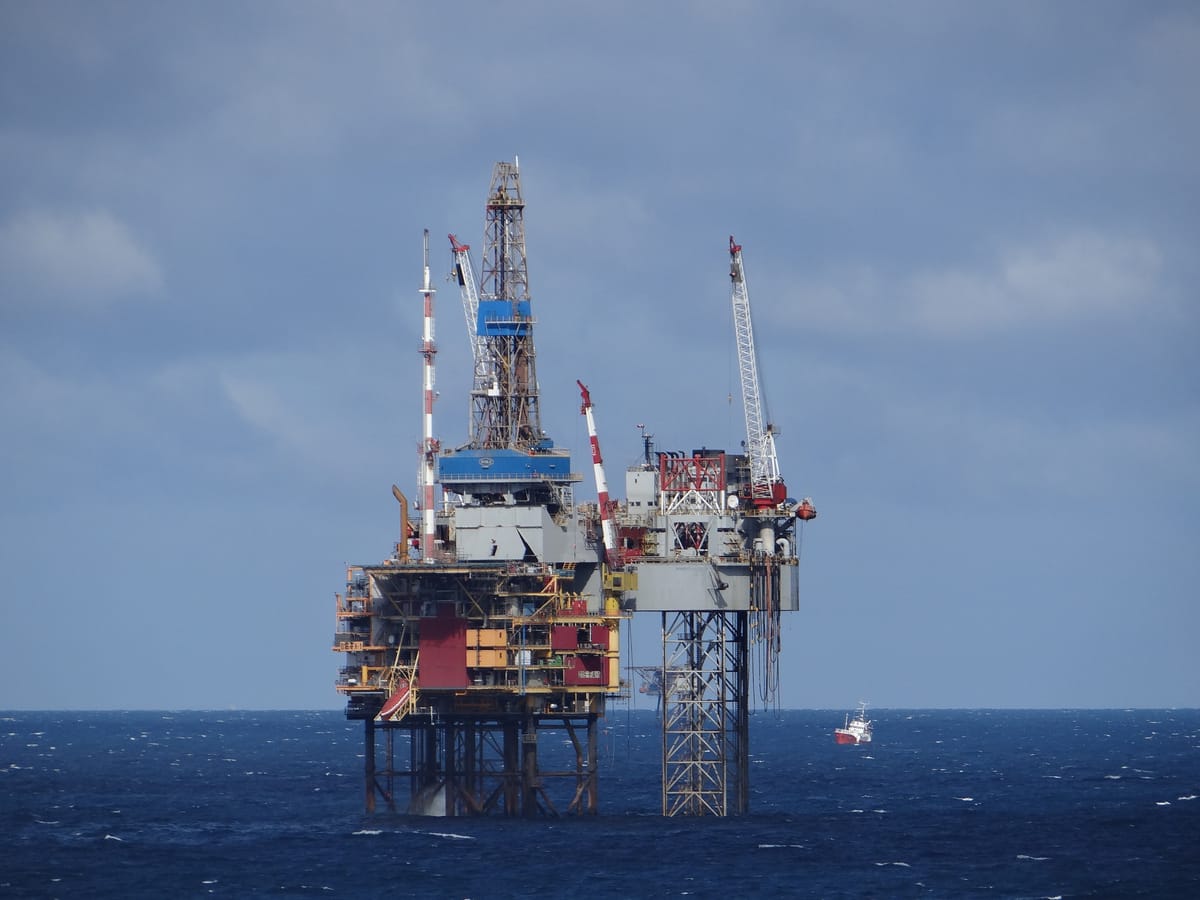
As war in the Persian Gulf sent oil prices surging above one hundred dollars a barrel, Reform UK pledged to “make Britain energy independent once again by drilling for our own oil and gas.” Richard Tice, the party’s energy spokesperson, who divides his time between his Boston and Skegness constituency and the United Arab Emirates, pledged to go further. If elected as part of a Reform government, he said, he would mimic the Emiratis by using tax revenue from hydrocarbons to begin a British sovereign wealth fund.
Reform have spotted a chance to make a common-sense case for North Sea oil and gas, one born out of national necessity, against a Labour government that has prohibited future offshore drilling. These are affective arguments. They tie the day-to-day lives of millions of voters to major decisions of state. On 10 March, the party’s leader, Nigel Farage, filled up cars at a Derbyshire petrol station which the party operated for a day in a PR stunt meant to simulate the cuts to fuel duty that the party would pass on to motorists when in power. Labour’s green levy taxes, Farage said, were “lunatic”, as was the drilling ban. By reversing them, he said, the country could generate fiscal revenues and secure critical supplies of gas and oil.
Even as North Sea production dwindles, the prospect of opening up streams of British oil in these newly turbulent times has begun to animate a renewed debate between environmentalists and the Trump-inspired set keen to “drill baby drill”. What is often missed in this debate, however, is that North Sea oil and gas is now a chimera, as supplies dwindle and accessing what remains becomes ever more difficult and expensive. Yet the promise of offshore bounties remains tantalizing close in the political imagination, fuelling all manner of fantasies. These are made all the more powerful by instilling a belief in the popular imagination of left-wing forces blocking Britain from once more becoming rich and energy secure.
Nationalism has often been conceptualised through the imagined communities of millions of people, made real through senses of shared historical stories and culture. A more trite, if no less real, version takes a sporting embodiment, with the nation attached to the eleven named individuals on the starting line-ups of national football teams. To this, we can now add energy sources as another means of imagining nationhood and realizing its wealth and power. The history of the North Sea demonstrates this leveraging of energy for national identity. Importantly, however, it has not been confined to the politics free market right; it has form on the left too, providing inspiration for both Scottish and British nationalists alike.